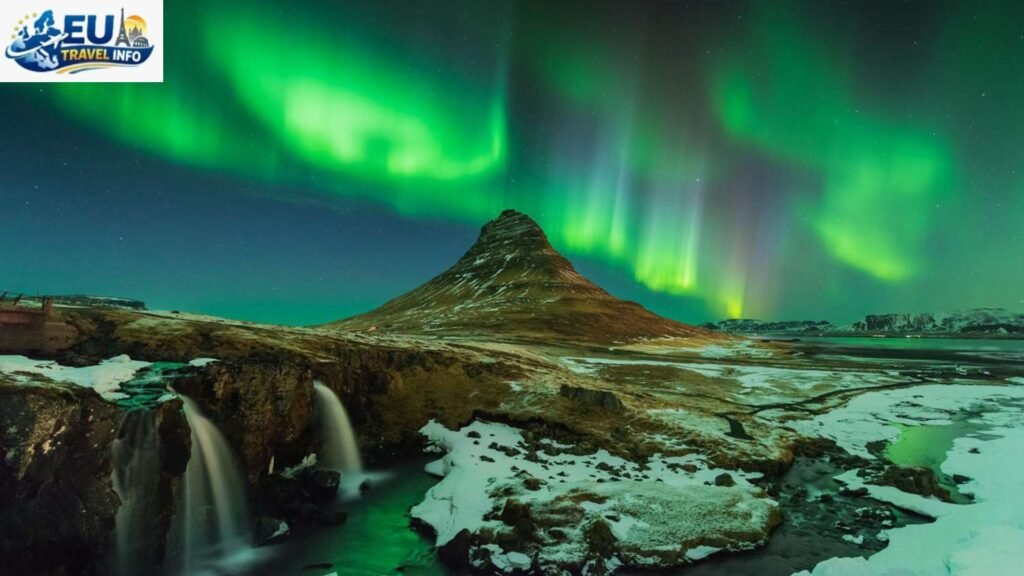
You stand under a massive, dark sky in Iceland. Above you, green, purple, and pink lights swirl like silk ribbons in a breeze. It is a sight that stays with you forever. You want to see this magic in person. 2026 is the year to do it.
Why 2026 Is a Golden Year for Aurora Hunters
You picked a lucky time to plan your journey. The sun follows an 11-year cycle of activity. Right now, we are in the Solar Maximum of Cycle 25. This means the sun is very active. It sends more charged particles toward Earth. These particles hit our magnetic field and create the Northern Lights.
Solar activity is at its highest point in over a decade. Because of this, the lights show up stronger and more often. In fact, the best time to see northern lights in iceland 2026 is during this peak period. Scientists saw sunspot numbers hit 156.7 in late 2024, which was much higher than they expected. Therefore, you have a much better chance of seeing vibrant colors and fast movement in the sky during your 2026 trip. This high activity will stay with us through 2026 and maybe into 2027. Plus, even if conditions are not perfect, the lights might still be bright enough to see.
The Best Time To Visit Iceland For Northern Lights
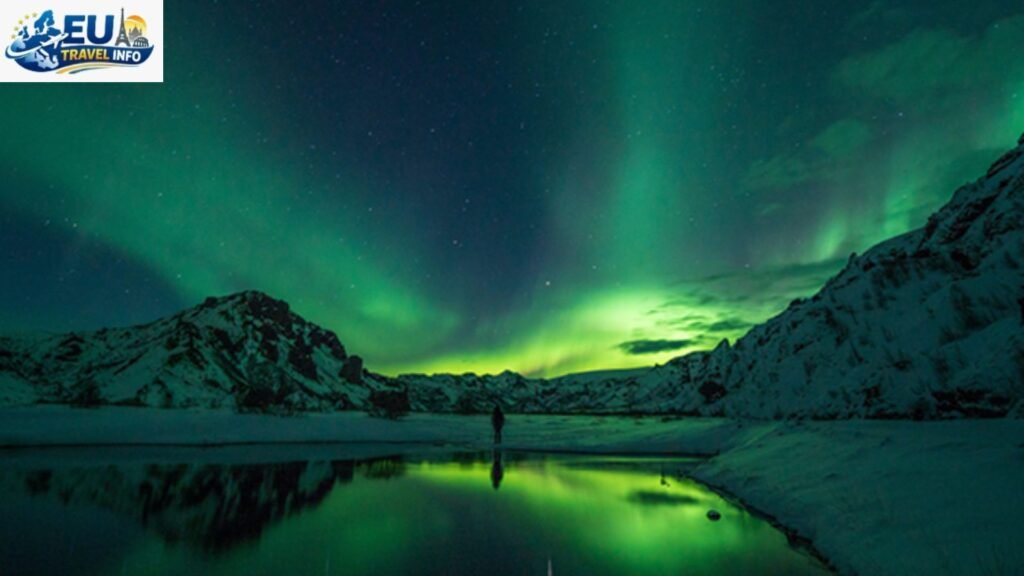 You must time your visit right. The aurora season in Iceland runs from late August or September to mid-April. During these months, the nights are dark enough for the lights to shine. However, you cannot see them in the summer. The Midnight Sun makes the sky too bright from May to August.
A Month-by-Month Guide for Your 2026 Trip
First of all, let us look at the specific months. Each one has its own vibe.
- September: The lights return. You get 12 to 14 hours of darkness. The weather is milder than in winter. At that time, you can still enjoy green landscapes.
- October: You get about 15 hours of darkness. It is a good time for frequency. However, it can be quite rainy.
- November: The nights get very long with 16 to 18 hours of darkness. Skies are often clear. Additionally, you only get 8 to 10 hours of daylight.
- December: This month has the maximum darkness. You only get 4 to 5 hours of daylight. It is a magical time around the winter solstice on December 21. Similarly, the weather can be unpredictable and cloudy.
- January: You might see up to 20 hours of darkness. It is the peak of the season. The cold is intense.
- February: Many experts say is February a good time to see the northern lights in iceland? Yes, it is often the best month to see northern lights in iceland. You get a mix of long nights and stable weather. The days are slightly longer, so you can do more tours during the day.
- March: This is the best time to see northern lights in iceland march because of the equinox. Earth is at a right angle to the solar wind. This makes the magnetic field more receptive to solar activity. This is known as the Russell-McPherron effect.
- April: The lights are visible in the first week of April. Later, the nights become too bright.
Where Is The Best Place To See The Northern Lights In Iceland?
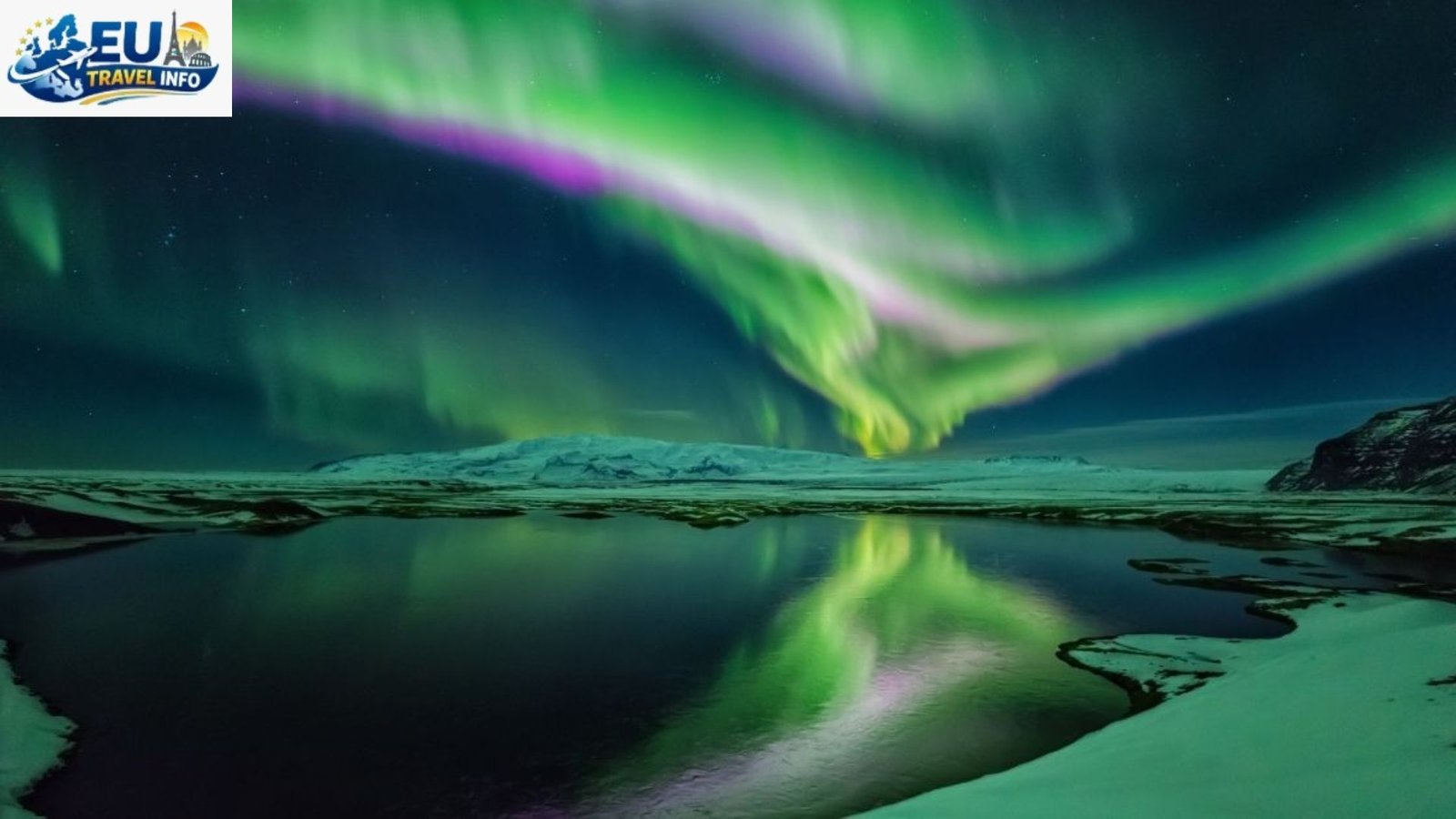
You need to get away from city lights to see the best show. Therefore, you should head into the countryside. Here are ten top spots for your 2026 adventure:
- Jökulsárlón Glacial Lagoon: This is the “crown jewel”. Icebergs float in the water and reflect the lights. It is located in the southeast. No towns are near, so it is very dark.
- Snæfellsnes Peninsula: You can see mountains, cliffs, and beaches. Kirkjufell Mountain is a famous spot for photos here. The west side is very dark.
- Thingvellir National Park: It is only 40 minutes from Reykjavík. You can stand where tectonic plates pull apart. The open skies are perfect for viewing.
- Goðafoss Waterfall: This “Waterfall of the Gods” is in the north. The lights dance in the mist of the falls. Additionally, it is part of the Diamond Circle.
- Hvitserkur: This is a tall rock in the sea that looks like a troll. It is far from bright lights. At low tide, the wet sand mirrors the sky.
- Raufarhöfn: This is as far north as you can go. The Arctic Henge is there. Big stones frame the lights.
- Siglufjörður: A quiet fishing town in a fjord. Mountains surround it and block city glow. The clouds often move fast, which gives you clear gaps.
- Ísafjörður: Located in the Westfjords. It is super peaceful. The steep cliffs and still water make a great backdrop.
- Vestrahorn: A rugged mountain with a black sand beach. It is not as crowded as other spots. The water in the lagoon is often calm and reflective.
- Þakgil: A hidden valley near Vík. Green mossy cliffs frame the sky. No roads or houses are nearby to spoil the dark.
Best Time to Visit Iceland for Northern Lights and Whale Watching
You might want to see more than just the sky. North Iceland is the place to be for both. Húsavík is the whale watching capital. You can take a boat during the day to see humpback whales. Later, you can wait for the aurora to appear over the ocean. Gradually, the winter whales move through the fjords. This combination makes for a perfect trip for nature lovers.
The Magic Hour: When to Look Up
You do not just need the right month. You need the right time of day. The prime window is between 11 pm and 1 am. This is magnetic midnight. In Iceland, the magnetic pole is directly between you and the sun at this time. The aurora reaches its largest extent then. However, you can see them anytime from 9 pm to 3 am if activity is high.
Three Things You Need for Success
First, you need darkness. Avoid the full moon if you can. New moon periods are better. Second, you need clear skies. Clouds are your biggest enemy. Third, you need solar activity. We measure this with the Kp index. A Kp of 3 or higher is usually great for a show. Finally, you need patience.
Practical Tips for Your Journey
- Dress Warmly: It can drop to -30°C. Wear wool layers and a waterproof coat.
- Use Apps: Download Hello Aurora or check vedur.is. They give you real-time data and cloud maps.
- Rent a 4×4: Winter roads are icy. A four-wheel drive is much safer.
- Stay for 5-7 Nights: This increases your odds. You can wait out the clouds.
- Try a Tour: Guides know the best dark spots. They track the weather for you.
You are ready for the trip of a lifetime. The 2026 solar maximum is waiting for you. Pack your camera. Bring your warm socks. The lights are about to begin.
Frequently Asked Questions
What are the best months to see the Northern Lights in Iceland?
The season is from late August to mid-April. Experts often recommend February and March for the best balance of dark skies and weather. November through January provide the maximum hours of darkness.
What is the cheapest month to visit Iceland?
The sources do not list the specific “cheapest” month, but they note that March can have cheaper flights than mid-winter. September and October often have fewer tourists than the summer peak. November and January are also less busy than the holiday season in December.
What is the best month to go to Iceland?
This depends on what you love. For the Northern Lights, February is a top pick for its dark nights and slowly returning daylight. If you want to see the Midnight Sun, you must visit in June or July. For a mix of mild weather and aurora, September is excellent.
What are my chances of seeing the Northern Lights in Iceland?
Your chances are very high if you stay for 5 to 7 nights during the winter. During the 2026 solar maximum, activity is much stronger than usual. Most visitors who actively hunt for the lights over a week report success.
Concluding Words
The Best Time To Visit Iceland For Northern Lights Viewing Guide 2026 highlights that 2026 is a peak year due to the solar maximum. You should aim for the months of September through April, with February and March offering the best conditions. To succeed, find a dark location like Jökulsárlón or Thingvellir, watch the Kp index, and stay for at least five nights.