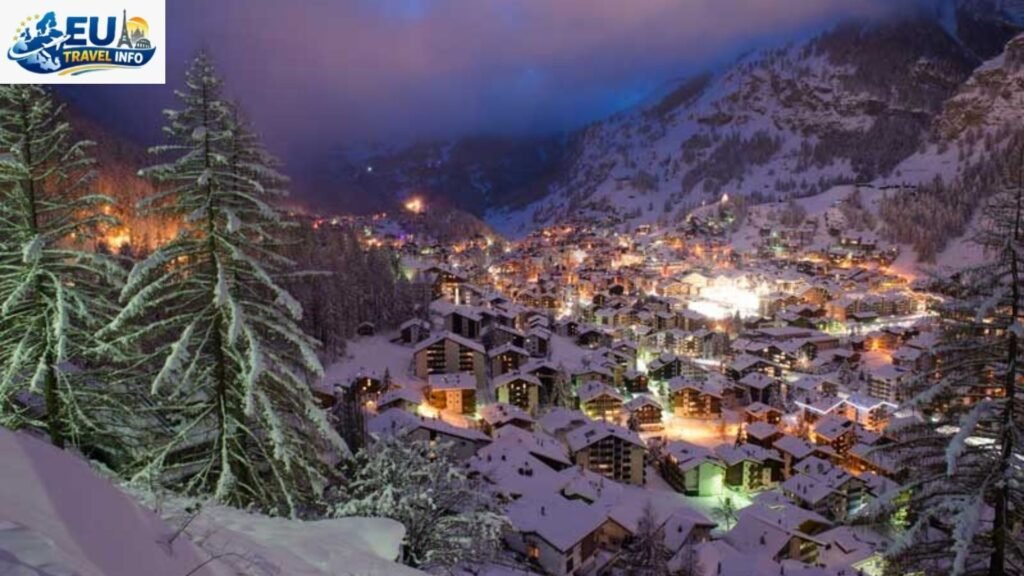
You dream of a landscape wrapped in a layer of cream-like snow. You want to stand where the air is cold and the silence is deep. Switzerland in 2026 is the place for this dream. You need to know the right time and the right spot to find that perfect winter magic. This guide will show you exactly when the flakes fall and where the ground stays white.
The Secret of Altitude: Why Height Matters
First of all, you must understand one rule. Altitude is everything. You can stand in a green field in a city while a blizzard rages just a short train ride away in the mountains. This is the reality of Swiss weather. Large cities like Zurich, Geneva, and Lucerne are often mild. They sit in the lowlands. Snow does not fall there very often. You might see rain or fog instead.
Davos sits at 1,600 meters above sea level. At this height, white holidays are almost a standard. Similarly, Zermatt and St. Moritz offer reliable snow because they are so high up. If you stay below 800 meters, you take a big risk with the weather. The Best Time To Visit Switzerland For Snowfall depends on how high you are willing to go.
Month by Month: Your 2026 Snow Calendar
November: The Early Chill
 Best time to visit switzerland november is for those who seek quiet. The crowds are gone. The world is still. Though it is not officially winter yet, the mountains start to get cold. You will see the first dusting on high peaks. However, the lowlands are often grey and foggy. Statistics show that snow is still rare in the valleys during this month. You might find the worst time to visit switzerland if you only want deep snow in the cities.
December: The Christmas Dream
Everyone wants a white Christmas. But the truth might surprise you. In the Swiss Plateau, a white Christmas is rare. Since 1931, there has been no snow at Christmas in up to 75% of years in some cities. In Ticino, it is even less likely, with no snow in over 80% of years. St. Gallen is your best bet for a city Christmas with snow. It has had snow 54% of the time since 2001.
On top of that, December 24 to January 1 is the most expensive time to visit. You will pay high prices for a chance at a snow miracle. Winter magic truly starts to settle in late December.
January and February: The Peak of Winter
These are the best months for you. January is the coldest month. February is often the driest. Together, they offer the best chances for deep, powdery snow. Best time to visit switzerland temperature averages around -1.9°C during these months. It can drop much lower in the mountains. In Samedan, the average day temperature in January is -1.6°C.
January is the perfect time for skiing. The resorts are in full swing. February is also excellent, but it can get crowded during school holidays. You should book your mountain rides early in the morning to avoid the long lines.
March: The Sunny Snow Month
March is a hidden gem for snow lovers. You get longer days and more sunshine. In the high resorts, the snow is still thick. Arosa usually sees about 109.1 centimeters of snowfall in March. Davos gets about 65.5 centimeters.
Gradually, the snow starts to melt in the lower valleys. The landscape there can look brown and dull. Therefore, you should stay above 1,500 meters if you visit in March. Zermatt is a great choice now because its height keeps the snow cold.
April: The Transition
April is a month of two worlds. Spring sets in down low. Flowers begin to bloom. But on the mountain tops, you still find winter. You must visit the highest peaks to touch the snow now. Most ski resorts close this month.
Special Trips: Honeymoons and Budget Travel
The Romantic Escape
The best time to visit switzerland for honeymoon trips is during the winter months if you love cozy fires and snowy views. Imagine yourself in a horse-drawn sleigh in Zermatt. The Matterhorn towers above you. It is pure romance. If you prefer a green honeymoon, May and June are better for best time to visit switzerland for flowers. The Alpine meadows turn bright with color.
Saving Your Money

The cheapest time to visit switzerland is during the shoulder seasons. These are March to May and September to November. Hotels often give discounts of 20% to 40% in the spring. November is also a great budget season. You can visit museums and thermal baths for a lower price. You should use a Swiss Travel Pass to save on trains and buses. Plus, you can find free activities like hiking on lower trails or visiting lake beaches.
Summer Snow: Does It Exist?
You can find snow even in the heat. Best time to visit switzerland in summer is for hiking and swimming. But if you crave the white stuff, head to the glaciers. Places like Jungfraujoch at 3,463 meters have snow all year. Similarly, Titlis and Matterhorn Glacier Paradise offer summer snow experiences.
However, climate change is making this harder. In warm summers, even these high spots can lose their white cover. If you want the true winter feel, stick to January and February.
Regional Differences: Where to Go
Switzerland is small, but its weather is complex.
- Northern Switzerland: Places like Zurich and Basel are cooler and get regular rain.
- Southern Switzerland (Ticino): This is the warmest region. It has a Mediterranean feel with palm trees. Winters are mild here.
- The Alps: This is your snow zone. The weather is unpredictable. A sunny morning can turn into a snowstorm by lunch.
Important Statistics for Your Trip
- Average Winter Temperature: -1.9°C.
- Temperature Drop: Every 100 meters you climb, the temperature drops by 0.7 to 1.0°C.
- Highest Ski Resort: Zermatt at 3,820 meters.
- Snowfall Trends: Seasonal snow depth has decreased by 8.4% per decade since 1971.
- Sunniest Winter Spots: Lugano and Zermatt get more sun than the foggy valleys.
Packing for Your Adventure
You must dress in layers.
- Winter Essentials: Heavy jackets, thermal layers, gloves, and snow boots.
- Sun Protection: The sun is very strong on the snow. Bring sunglasses and sunblock.
- Safety Gear: Waterproof clothing is essential if you plan to ski or hike.
Capturing the Beauty
Winter is a challenging time for photos. Snow often looks grey in pictures. You should adjust your camera exposure by +0.3 or +0.7 to keep the snow white. A fast shutter speed will capture falling flakes as sharp dots. A slow speed will blur them into a soft mist. Finally, try squatting low to the ground to hide footprints in your shots.
A Note on Climate Change
Climate change is a reality in the Alps. Temperatures have risen by 3.0°C since measurements began. This is much higher than the global average. Therefore, the snow line is climbing. You will find more rain and less snow at lower heights than in the past. This is why choosing a high-altitude resort is more important than ever for your 2026 trip.
Safety First: Respect the Mountains
Winter weather is usually safe, but you must be careful.
- Check Forecasts: Always look at the weather each morning.
- Avalanches: Never leave marked trails. Check avalanche risk reports before you go out.
- Cold Protection: Keep your batteries close to your body so they do not die in the cold.
- Stay Hydrated: Drink hot tea to stay warm.
Final Thoughts on Your Journey
Switzerland in winter is a gift. You will see mountains that look like they are covered in cream. You will breathe the freshest air. Whether you want the thrill of the highest slopes in Zermatt or the quiet peace of a November morning, the snow is waiting for you.
FAQ
What months is there snow in Switzerland?
Snow is most common from December to March. However, it can fall in the mountains as early as October and stay as late as April. High peaks above 3,000 meters can have snow all year.
Which month is most beautiful in Switzerland?
This depends on your taste. January and February are the most beautiful for a “winter wonderland” feel with deep snow. September and October are stunning for fall colors. May and June are best for seeing wildflowers in the meadows.
What is the cheapest time to go to Switzerland?
The most budget-friendly months are the shoulder seasons: March to May and October to November. You will find lower prices for hotels and fewer people at famous spots.
What is the 8 day rule in Switzerland?
The sources provided do not contain information regarding an “8 day rule” in Switzerland. You may want to verify this specific travel regulation independently as it might refer to a specific type of travel pass or visa rule not covered in these weather and tourism guides.
Concluding Words
The Best Time To Visit Switzerland For Snowfall Complete Guide 2026 shows that January and February are your top choices for deep snow and winter sports. You must focus on high-altitude resorts like Zermatt, Saas Fee, and St. Moritz to guarantee a white landscape, especially as climate change makes the lowlands milder. While December offers holiday magic, it is expensive and snow is not a certainty in the cities. For those on a budget, the shoulder seasons in spring and late autumn provide the best value while still offering snowy views on the mountain tops.