

You stand in the middle of a busy airport terminal at seven in the evening. You look up at the giant departure board. You see a long list of flights to cities like London, Paris, and Frankfurt. Every single one of them leaves between six in the evening and midnight.
You wonder why you cannot just wake up, have a coffee, and hop on a plane at nine in the morning. Why Are There No Morning Flights To Europe? It seems like a simple request. However, the world of aviation is a complex machine. It is a mix of physics, money, and strict rules.
You are not alone in this feeling. Many travelers who love tours and world travel find the red-eye flight to be a difficult part of the journey. You lose a night of sleep. You arrive feeling like a zombie. You find yourself asking why are there no morning flights when it would make your life so much easier. To understand this, you have to look at the hidden forces that control the sky.
The Math of the Rotating Earth
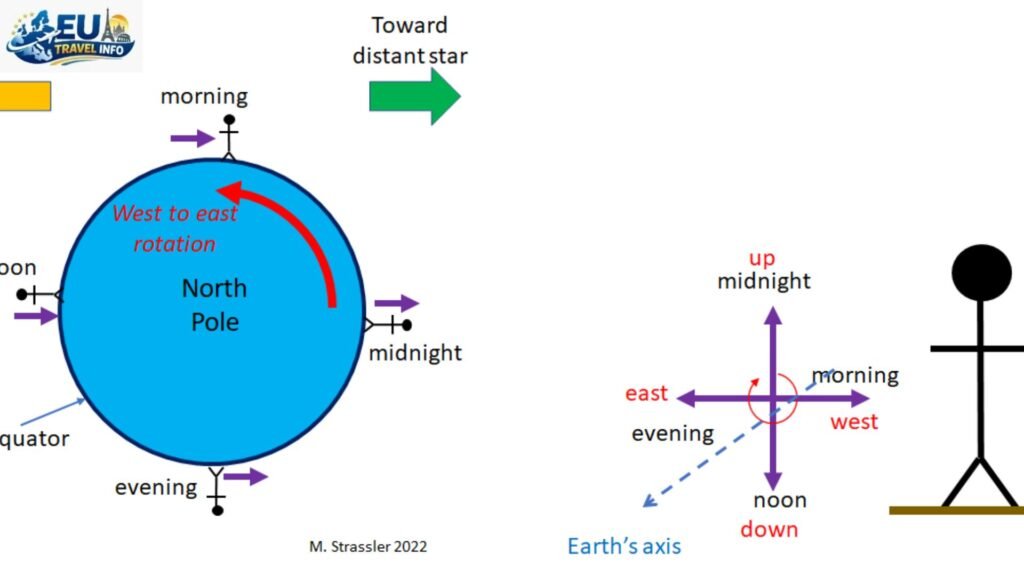
First of all, you must think about the rotation of the planet. The Earth spins from West to East at over 1,000 miles per hour at the equator. When you fly from North America to Europe, you are flying toward the sunrise. You are effectively “chasing” the sun, which makes the clock move much faster.
A standard flight from New York (JFK) to London Heathrow (LHR) takes about seven hours. If you leave at ten at night, you land at ten the next morning because of the five-hour time difference. Only seven hours of your life passed, but the local clocks moved ahead by twelve hours. This is what experts call time compression.
Now, imagine you took a morning flight instead. You depart at eight in the morning. You fly for seven hours. You land at three in the afternoon, New York time. However, the local time in London is already eight in the evening. By the time you get through customs and reach your hotel, it is ten at night. You spent your whole day in a metal tube. You missed a full day of sightseeing. Plus, you arrive just when everything is closing.
Why Are Flights To Europe So Expensive 2024?
You might also ask yourself: why flights to Europe are so expensive lately? The answer links back to how airlines use their planes. A Boeing 777 or a 787 Dreamliner is an expensive asset. These planes can cost $300 million. If a plane sits on the ground, it burns money instead of fuel.
Airlines need these planes to fly as much as possible to keep ticket prices from going even higher. An aircraft that flies to Europe overnight can land in the morning, get cleaned, and fly back to America during the day. This allows the plane to complete two revenue-generating trips in 24 hours. If a plane arrives late at night on a daytime flight, it often has to sit idle until the next morning. This is a waste of a multi-million dollar machine. Therefore, the cost of that “wasted” time gets added to the ticket prices. This is part of the reason why are flights to Europe so expensive 2024.
The Silent Hours: Airport Curfews
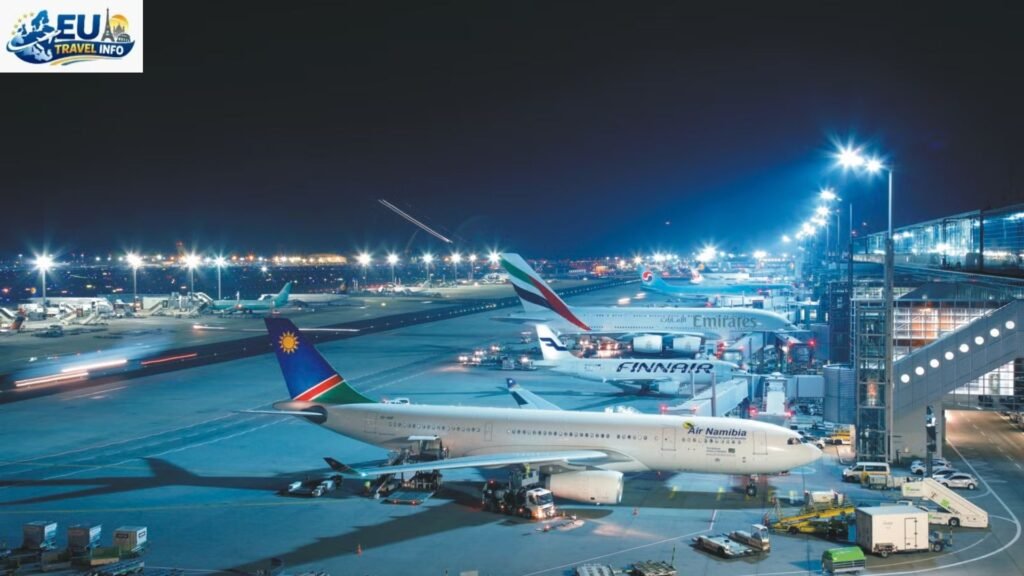
Additionally, you have to consider the locals living near major airports. People in Europe value their sleep. Because of this, many airports have strict night bans or curfews. At London Heathrow, for example, the government has placed restrictions on night flights since the 1960s. The airport is limited to only 5,800 take-offs and landings a year between 11:30 PM and 6:00 AM.
Other airports are even stricter. Frankfurt has a total ban from 11:00 PM to 5:00 AM. Zurich and Sydney have similar rules. If a morning flight from the U.S. gets delayed by just an hour or two, it might arrive after the curfew begins. The airline would face massive fines or be forced to land in a different city. This risk is too high for most carriers. They would rather arrive in the morning when the airport is wide open.
The Power of the “Arrival Bank”
Have you ever noticed how dozens of planes land at the same time in the morning? This is not an accident. Major hubs like London, Paris, and Dubai operate in waves. These are called arrival and departure banks.
The golden window for arrivals is between 6:00 AM and 11:00 AM. Hundreds of large planes touch down and release thousands of passengers. These people are not all staying in London. Most are connecting to smaller flights to Manchester, Rome, or Edinburgh. These connecting flights usually leave between 11:00 AM and 1:00 PM.
If you took a morning flight and arrived at 10:00 PM, you would miss all those connections. You would have to pay for a hotel at the airport. You would wait until the next morning to finish your journey. Airlines would lose all that “transfer revenue.” To them, a morning arrival is worth millions of dollars. In fact, back in 2016, an airline reportedly paid $75 million just for one pair of early morning landing slots at Heathrow.
Riding the Jet Stream
The wind also plays a huge part in this schedule. There is a high-altitude wind current called the jet stream. It circles the planet from West to East. In the winter, these winds can reach speeds of over 200 knots.
When you fly to Europe, this wind is a tailwind. It pushes your plane faster. It shaves an hour or more off your travel time. Airlines love to schedule eastbound flights at night to take maximum advantage of this free push. On the contrary, when you fly back to America, you are fighting a headwind. The flight takes longer. This is why you often see morning departures for the flight back to the U.S. but rarely for the flight to Europe.
Will Flights To Europe Get Cheaper?
As you plan your next tour, you might wonder: will flights to Europe get cheaper soon? It is hard to say for sure. Fuel costs and airport fees remain high. However, new planes like the Airbus A321XLR are changing the game. These are smaller, highly efficient planes that can fly long distances. Because they are cheaper to operate than giant jumbos, some airlines are experimenting with more variety in their schedules. JetBlue, for instance, has started offering a daytime flight from New York (JFK) to London using these smaller planes.
The Rare Exceptions: Finding Daytime Flights
Though they are rare, some morning flights do exist. If you absolutely hate flying at night, you have a few options. You just have to know where to look.
From New York (JFK) to London Heathrow:
- British Airways (BA178): Departs at 7:55 AM, arrives at 7:35 PM.
- Virgin Atlantic (VS26): Departs at 8:00 AM, arrives at 8:05 PM.
- JetBlue (B6 1107): Departs at 8:20 AM, arrives at 8:45 PM.
- American Airlines (AA142): Departs at 9:16 AM, arrives at 9:40 PM.
From Newark (EWR) to London Heathrow:
- United Airlines (UA934): Departs at 8:45 AM, arrives at 8:40 PM.
- British Airways (BA180): Departs at 7:55 AM, arrives at 7:50 PM.
Other North American Cities:
- Boston (BOS) to London: British Airways (BA238) leaves at 7:25 AM.
- Washington DC (IAD) to London: United (UA122) leaves at 8:25 AM.
- Halifax, Canada (YHZ) to London: Air Canada (AC868) leaves at 11:00 AM.
These flights are perfect if you want to stay awake, watch a few movies, and go straight to a real bed when you land. You might feel a bit tired, but you avoid the “jet lag fog” that comes from sleeping in a cramped airplane seat for three hours.
The Business Traveler’s Choice
You should also know that business travelers are the reason many of these night flights stay so popular. These passengers pay the highest fares. They want to work a full day in New York, sleep on the plane, and be in a meeting in London by 10:00 AM the next day. Airlines build their entire schedules to make these wealthy customers happy. To a business person, a daytime flight is a wasted work day. Until that changes, the night flight will remain the king of the Atlantic.
Is There Any Hope for Change?
Gradually, things are shifting. Travelers are sharing their positive experiences with daytime flights on social media. People are starting to realize that arriving at 9:00 PM and getting a full night’s sleep in a hotel is better than arriving at 6:00 AM and suffering all day.
Finally, you have to decide what matters most to you. Do you want to save every minute of your vacation time? Take the red-eye. Do you want to arrive feeling refreshed and ready to explore the next morning? Look for one of those rare daytime gems.
Frequently Asked Questions
Why are there no night flights in Europe?
Actually, there are some, but they are very limited. Most major European airports have noise quotas and curfews to protect residents. They limit take-offs and landings between 11:00 PM and 6:00 AM to keep the peace.
What is the 45 minute rule?
This rule is common for domestic travel and some international connections. It usually means you must be checked in and at your gate at least 45 minutes before departure. For international flights to Europe, however, you should always arrive much earlier—usually three hours—due to customs and security.
What is the riskiest time to fly?
Statistically, flying is very safe at any time. However, late-night flights are more likely to be affected by curfews. If your flight is delayed and arrives after an airport’s midnight cutoff, you might have to divert to a different city.
Are morning flights more empty?
Sometimes. Because most people prefer the convenience of arriving in Europe in the morning (via an overnight flight), the daytime flights can have more open seats. This is not always true, but it is a nice bonus if you manage to snag a row to yourself.
Concluding Words
The mystery of Why Are There No Morning Flights To Europe comes down to a few key reasons. The fast-moving clocks of the time zones, the strict noise curfews at European airports, and the economic need for airlines to keep their planes moving all play a role. While the red-eye remains the standard, a small number of daytime flights are available for those who value sleep over schedule. Understanding these forces helps you become a smarter traveler.