
You sit at your computer. You plan your next big vacation. You look at the prices for a flight from New York to Los Angeles. The screen shows a price of five hundred dollars. You recall your friend who just traveled across Europe.
She flew from London to Rome for thirty dollars. The frustration builds. You ask yourself a simple question. Why Are US Flights So Expensive Compared To Europe? This is not a dream. It is the reality of the skies today.
The price of a ticket in the United States has climbed by twenty-five percent in recent months. It is the biggest jump since people started tracking these numbers. You feel the pinch in your wallet. You wonder why your domestic travel costs as much as a trip to another continent.
The answer involves a mix of big business moves, old laws, and even the lack of trains. This analysis will guide you through the reasons behind these high costs. You will see why it is often cheaper to fly from Europe than the US.
The Big Four and the Lack of Choice
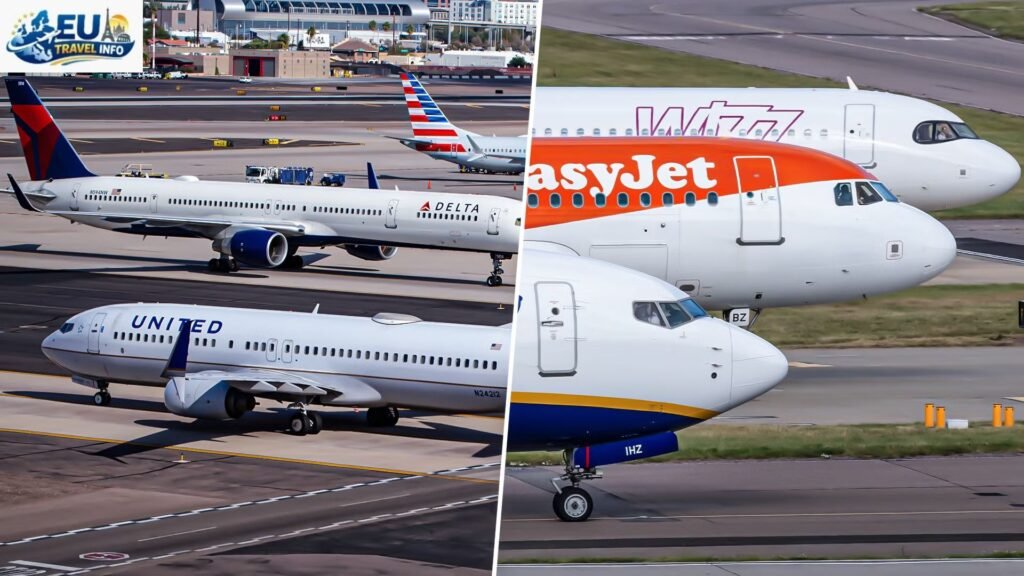
The first thing you must understand is who owns the sky. In the United States, a few massive companies control almost everything. Over the last ten years, big mergers changed the game. Nine large airlines became four. Now, American, United, Delta, and Southwest own eighty percent of the market. These companies do not fight for your business like they used to do. They have their own areas where they are the bosses.
You might live in a city like Philadelphia. One airline controls seventy-seven percent of the seats there. Because there is no one else to choose, the price goes up. Fares in Philadelphia rose ten percent above the national average after the big mergers. The same thing happened in Atlanta. Delta owns eighty percent of the seats there. When competition goes down, your ticket price goes up.
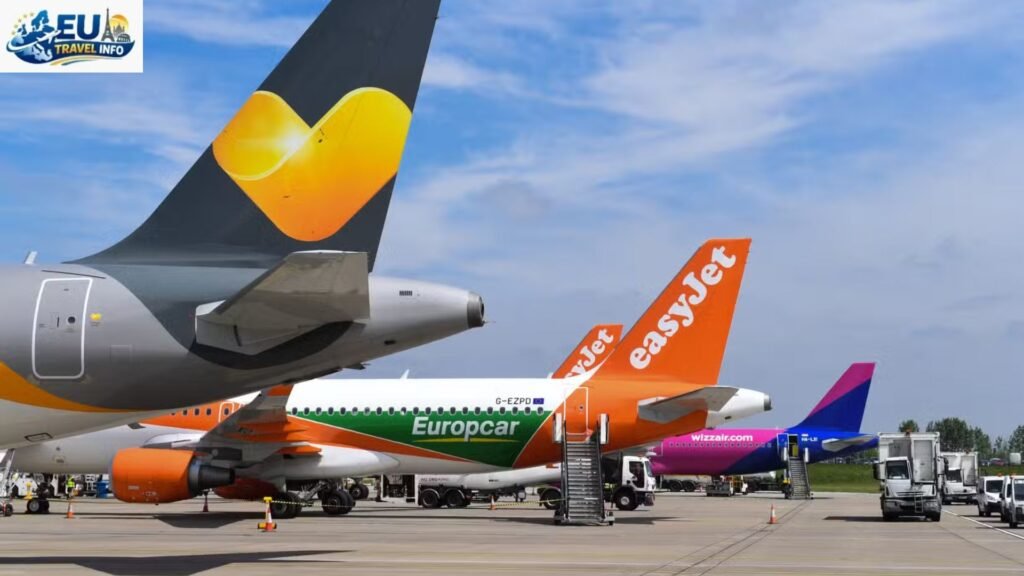
On the contrary, Europe has a different story. The European Union has 195 different airlines. That is more than double the number in the United States. It takes twenty-eight different airlines to reach eighty percent of the market in Europe. This means airlines must fight for you every single day. If one airline raises a price, ten others are ready to take you for less. This is a primary reason why flights in Europe are so cheap.
The Secret of Open Skies
Europe has a special rule called “Open Skies”. Any airline based in a European Union nation can fly between any other cities in the union. For example, Ryanair is from Ireland. However, it can fly between Frankfurt in Germany and Madrid in Spain. It competes directly with German and Spanish airlines on those routes. This freedom drives prices down to the floor.
The United States does not allow this. Only airlines owned by Americans can fly between US cities. Laws require that US citizens own at least seventy-five percent of the company. Foreign airlines like Japan Airlines can fly you from Tokyo to Los Angeles. But they cannot pick you up in Los Angeles and drop you off in Seattle. This protection keeps global competition out of our domestic market. If companies like Emirates or Singapore Airlines could fly within the US, they would challenge our local airlines to do better. But the US government keeps the door shut to protect local companies. Therefore, you pay the price for this lack of global pressure.
The Power of the Train

You probably know that trains in the US are not great. Aside from the Northeast, rail travel is slow and not very popular for passengers. The United States has only 375 miles of high-speed rail. This means the airplane is often your only fast choice for travel between cities. When you have no other choice, airlines can charge whatever they want.
Europe is different. They have 2,464 miles of high-speed rail. These trains are fast and comfortable. On many routes, the train is even faster than a plane when you count the time spent at the airport. Because of this, budget airlines must drop their prices to stay relevant. They must convince you to take a less convenient plane by offering a price that is too low to ignore. This heavy competition with railroads is a huge factor in why are us domestic flights so expensive compared to europe.
The Junk Fee Trap
The price you see at the start of your search is rarely the price you pay at the end. Airlines have mastered “drip pricing”. This is a digital trick to get you to click on a low price. Then, they add fees for every little thing. You pay for a bag. You pay to pick a seat. You even pay to sit with your family.
In 2024, US airlines collected a record $7.27 billion in checked bag fees. That is a ninety-one percent increase from ten years ago. American Airlines alone made $1.5 billion from bags. These “service charges” are a gold mine for companies. They are also tax-free for the airlines. While the base fare might look lower than it did years ago, the extras make the total trip cost much higher.
Ancillary revenue is the fancy name for these fees. For some airlines like Frontier, fees make up sixty-two percent of their total money. You are not just a passenger to them. You are a “captive audience for retail sales”. In Europe, some countries are fighting back. Spain recently fined budget airlines 179 million Euros for charging for hand luggage. The US tried to pass a law for more transparency, but a court blocked it in early 2026. So, for now, those fees will stay hidden until you reach the checkout screen.
The Pilot Crisis
A major reason why are us flights more expensive than europe involves the people in the cockpit. The United States has a massive pilot shortage. Over 16,000 pilots will reach the retirement age of sixty-five in the next five years. At the same time, the rules to become a pilot are very strict. You need 1,500 flight hours to fly for a US airline. Other countries only require 200 hours.
This small supply of pilots means airlines must pay them much more to keep them. Some pilot salaries rose by eighty percent since 2020. A senior captain at a major airline can now earn over $400,000 per year. While this is great for the pilots, the airlines pass these high labor costs directly to you through your ticket price.
Geography and Airports
Europe has a natural advantage because of its shape. The cities are closer together. This allows planes to fly more short trips in a single day. Also, Europe is full of small secondary airports. These were often built during World War II. London has six different airports to choose from. Most US cities have only one major hub.
Budget airlines in Europe use these small airports to save money. They negotiate very low fees with the airport owners. Sometimes, the airports even pay the airlines to bring people there. In the US, most airlines use the same big, expensive hubs. This keeps the cost of operation high, and that cost lands on your plate.
Taxes and Fuel
Airlines in the US pay taxes on their fuel. Each state has its own rate. On top of that, your ticket includes many federal fees. You pay a September 11th Security Fee of $5.60. You pay a Flight Segment Tax of $5. These can add up to twenty-two percent of your total ticket price.
Europe has a big loophole. The Chicago Convention from the 1940s prevents the taxation of aviation fuel for international flights. Most flights in Europe go between different countries, so they do not pay this tax. This saves them billions of Euros every year. While some countries want to change this to help the environment, it currently keeps prices very low for the traveler.
The Loyalty Program Business
You might think an airline is a transportation company. It is actually more like a bank. Major US airlines make more money from their credit cards than from flying people. Delta made $7.5 billion from American Express in 2024. This revenue is high-margin and safe.
Because they focus so much on these financial deals, the actual flight becomes less important for their profits. They use high fares to push you toward their loyalty programs. If you want a “free” flight, you must spend thousands of dollars on their cards. But those miles lose value every year. In 2023, United raised the price of award flights to Europe by up to forty-six percent overnight. You are trapped in a cycle where the cash price is high, and the “points” price is also climbing.
Is it Cheaper to Fly From Europe?
The data says yes. On a per-mile basis, European flights can cost as little as one-third of US costs for the same distance. A flight from Lisbon to Geneva might cost you $35. A similar flight between Houston and Denver costs at least $130. This massive gap is the result of all the factors we discussed. More competition, more trains, and lower airport costs make the difference.
You must also consider the “Basic Economy” trap in the US. These fares look cheap but they take away your rights. You cannot bring a bag. You cannot choose a seat. When you add those things back, the price often ends up higher than it was ten years ago. In Europe, even with their own fees, the base price starts so low that the final total stays much more affordable for the average person.
The Role of Technology
Airlines now use Artificial Intelligence (AI) to set your price. They do not have a set price list for bags or seats anymore. The AI looks at your search history. It looks at what phone you use. It looks at the weather. Then, it calculates the highest price you are willing to pay at that exact second.
By late 2025, seventy-three percent of major airlines used these AI models. Two people sitting next to each other on a plane might have paid completely different prices for the same checked bag. This “surveillance pricing” makes it very hard for you to find a true deal. The system is designed to extract every possible dollar from your pocket.
How to Save Money
You are not totally helpless. You can still find ways to beat the high cost of US travel. First of all, look at secondary airports. If you are flying to a major city, check the smaller airports an hour away. The savings can be huge.
Second, avoid the “Basic Economy” lure unless you really have no bags. Those fees at the gate are punitive. American Airlines might charge you $65 at the gate for a bag that should have been thirty dollars.
Third, consider the timing. AI prices change every three seconds. If a price looks too high, wait a few hours or use a different device to search again. Sometimes, the algorithm will give you a better deal if it thinks you are a new customer.
Frequently Asked Questions
Why are flights in the US more expensive than Europe?
The main reasons are the lack of competition and the absence of high-speed rail. In the US, four airlines control eighty percent of the market, while Europe has nearly 200 airlines fighting for passengers. Additionally, European airlines compete with a massive 4,000-mile high-speed train network, which forces them to keep their fares low.
What is the most untrusted airline?
According to recent consumer satisfaction data, Frontier Airlines often sits at the bottom of the rankings. In 2025, it had a low score of 65 on the satisfaction index, largely due to its high hidden fees and “all-unbundled” model that frustrates many travelers.
What is the airport 45 minute rule?
(The following information is from general industry knowledge as it is not explicitly detailed in the provided sources). The 45-minute rule is a standard requirement by many airlines that you must be checked in and at your gate at least 45 minutes before your scheduled departure time. If you arrive later than this, the airline may give your seat to a standby passenger or prevent you from boarding the plane.
Which European country has the cheapest flights from the USA?
The sources mention that Lisbon, Portugal is a major hub for low-cost travel, with flights within the continent costing as little as $35. Historically, countries with large international hubs like Portugal, Ireland, and Iceland often offer the most competitive rates for travelers crossing the Atlantic from the US.
Concluding Words
The sky is a crowded and expensive place in the United States. You pay for the massive mergers of the past decade. You pay for the lack of a high-speed rail network. You pay for the pilot shortage. And you certainly pay for the complex web of hidden fees.
Europe has its own problems, but its system is built for the passenger’s wallet. Until the US government opens our skies to more competition or invests in better trains, your domestic flight will likely remain a luxury. You must be a smart traveler. You must look past the “teaser” prices. You must understand that in the US, the airline is often a flying retailer and a credit card company first, and a transportation provider second.