
You stand in the middle of a crowded terminal. Your suitcase feels heavy. The departure board flickers with red text. Travel in Europe is changing fast. You might remember the days when you could breeze through security with an hour to spare.
Those days are gone. The European Union has introduced new digital border systems. These systems change everything for you as a traveler. It is time to learn the new rules of the road. Or rather, the new rules of the sky.
The Golden Rule of Timing
First of all, you must understand the basic time frames. Most experts agree on a simple split. You should arrive two hours early for domestic or short-haul flights. This usually covers travel within the Schengen Area. However, you need three hours for international or long-haul flights. This is especially true if you are heading to a non-Schengen country like Ireland or the United Kingdom.
Do not take these numbers as mere suggestions. They are lifelines. Long lines. Slow security. Unexpected crowds. These are the hallmarks of modern European airports. You might think two hours is plenty for a quick hop to Paris. Similarly, you might think three hours for a flight to New York is overkill. You would be wrong.
The Biometric Border Chaos of 2026
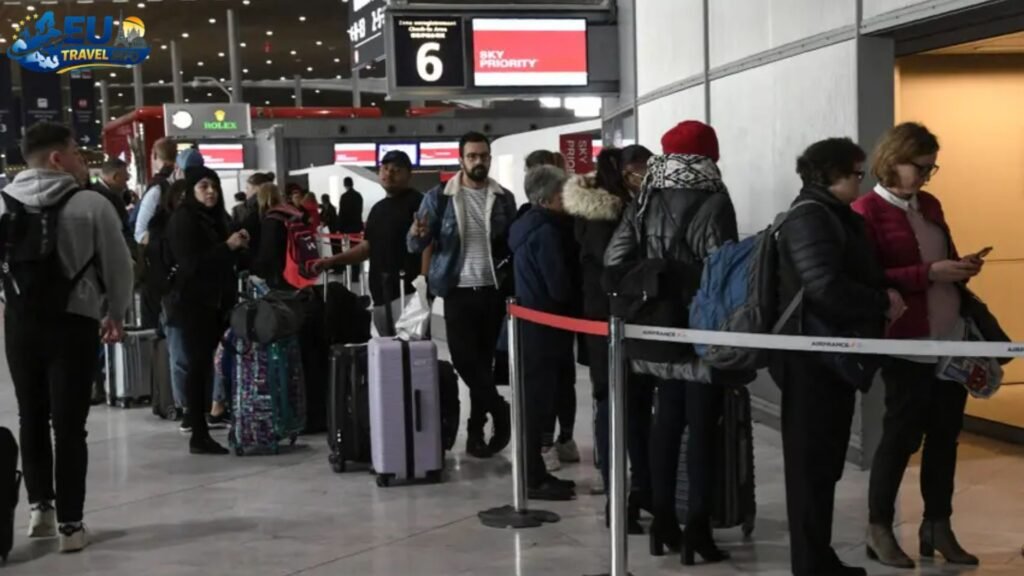
The biggest reason for these long waits is the Entry/Exit System, also known as EES. This system launched on October 12, 2025. It replaced the old method of stamping passports with a digital record. Now, every non-EU traveler must provide four fingerprints and a facial scan. This applies to you if you hold a US, UK, Canadian, or Australian passport.
The impact is massive. Processing times have increased by up to 70 percent. This is a staggering statistic. It means the line that used to take ten minutes now takes nearly twenty. Additionally, the full mandatory date for this system is April 10, 2026. You are only weeks away from total compliance.
Reports from the Front Lines
You should look at the data from specific hubs. The situation is often grim.
- Lisbon Airport recorded queues of up to seven hours. They actually had to suspend the system for three months because it was so bad.
- Geneva Airport saw waits of five to six hours during the winter ski season.
- Paris Charles de Gaulle and Madrid Barajas consistently report three-hour backlogs.
Therefore, you cannot rely on luck. Heavy crowds. Broken kiosks. Stressed staff. These factors will eat your time. At Prague Airport, kiosks failed, and officers had to take fingerprints manually. This caused the terminal to overflow with people. Plus, the Parafe e-gates in Paris do not work for US or UK passports under the new system yet. You will be stuck in the manual lane with everyone else.
The Liquid Rule Update
You also need to worry about what is in your bag. New EU regulations took effect on September 1, 2024. You are now restricted to liquid containers of 100 milliliters or less in your carry-on baggage. This rule applies at all European airports. Even if the airport has fancy new scanners, the 100ml limit is back for now.
It is a simple rule. One clear bag. Small bottles. No exceptions. If you try to bring a large bottle of fancy Italian wine in your hand luggage, you will lose it. Gradual changes in technology promised we could bring more. However, the European Commission stepped back to ensure safety.
Airline Specifics and Deadlines
Every airline has its own clock. You must watch it closely.
Ryanair is quite strict. Their bag drop desks open two hours before departure. They close exactly 40 minutes before the flight. If you are one minute late, they may deny you boarding. You must be at the gate 30 minutes before takeoff.
EasyJet offers a bit more flexibility with online check-in. You can check in 30 days before your flight. However, their bag drop times vary. For flights from London Gatwick or Lisbon, the desk opens two and a half hours early. For flights from Amsterdam to the UK, it is three hours.
Air France has what they call the 45-minute rule. This means you must finish check-in and bag drop at least 45 minutes before a domestic flight. For international trips, this window is usually 60 minutes or more.
The Experience in Rome and Barcelona

You might find yourself at Rome Fiumicino (FCO). Travelers there report that the airport is “elbow to elbow” even at four in the morning. If you have a 7:00 AM flight, you should arrive by 4:00 AM or 4:30 AM. On top of that, security in Terminal 1 is very fast, but Terminal 3 for US flights is slower.
In Barcelona (BCN), the passport check can take 30 minutes on a normal day. If there is a holiday, the staff might be thin. One traveler noted that they were “burned” by a two-and-a-half-hour arrival in Madrid and now always choose three hours. You should follow that lead.
Why You Should Arrive Early
There are many benefits to being the first person at the terminal.
- Lower Stress: You do not have to run through the halls like a madman.
- Security Buffers: Thorough checks take time.
- Meal Times: You can grab a decent breakfast or dinner before you board.
- Shopping: You can browse the duty-free shops for last-minute gifts.
Finally, you might even have time to sit and relax. Quiet corners. Cold drinks. A good book. It is much better than sweating in a security line while the gate agent calls your name for the final time.
Connections and Layovers
If you are connecting through a Schengen hub like Frankfurt or Amsterdam, be careful. You will likely have to clear immigration. Experts suggest a minimum three-hour connection buffer. The EES registration will happen at your first point of entry into the Schengen Area. If that first stop is a busy hub, you need that extra time.
Similarly, the Eurostar and ferry crossings are not exempt. EES applies at all external borders. St. Pancras station in London has expanded its booths, but you should still arrive very early.
Practical Advice for the Mature Traveler
You have worked hard for your vacation. Do not let a border kiosk ruin it.
- Check the calendar: National holidays mean fewer staff and bigger crowds.
- Use the app: Most airlines let you handle check-in on your phone.
- Pre-register: There is a voluntary EU pre-registration portal that opened in January 2026. It might save you a few minutes.
- Dress for success: Wear comfortable shoes for those long walks to the “back end” of the airport.
On top of that, keep your passport chip accessible. The kiosks need to read that chip to verify your identity. If you have an older passport without a chip, you will have to go to a manual desk.
Gradually, you will get used to these new digital hurdles. For now, the best tool in your travel kit is time. Give yourself plenty of it. Early arrival. Calm nerves. Successful flight. That is the way to tour Europe in 2026.
Frequently Asked Questions
How early should I get to the airport within Europe?
You should aim for two hours if you are flying within the Schengen Area or on a domestic route. If you are crossing a border to a non-Schengen country, you should increase that to three hours to handle passport control.
What is the 45 minute rule?
This is a strict deadline used by airlines like Air France. You must complete your check-in and drop off your bags at least 45 minutes before your scheduled departure. If you miss this window, you will likely be denied boarding.
Do I really need to be 3 hours early for international flights?
Yes, you do. With the new EES biometric checks, passport lines are much longer than they used to be. Three hours gives you a safety net for system crashes or massive crowds.
What is the airport 45 minute rule?
It refers to the final cutoff time for passenger processing. It ensures the airline has enough time for security compliance and baggage handling before takeoff. It is an operational necessity to keep flights on schedule.
Concluding Words
Traveling across Europe now requires more patience and better planning than ever before. You must account for three-hour waits for international flights and two hours for domestic hops to stay safe.
The new EES biometric system and 100ml liquid limits add layers of complexity that can slow you down. Arrive early to ensure your journey is a pleasant tour rather than a stressful race.