You walk down a cobblestone street in the heart of Vienna. The air is cold, but the smell of melted butter and fried meat pulls you toward a warm doorway. You have come to find the National Dish of Austria. This country is a paradise for people who love to eat well.
You will find that the national cuisine of Austria is more than just food. It is a story of an empire. It is a mix of many cultures. People often ask: what food is Austria known for? Most people think of a giant, golden-brown piece of meat on a plate.
Others think of a rich, boiled beef that emperors loved. You are about to go on a trip through the best tastes this land has to offer.
The Great Debate: Two National Dishes?
You might think that picking a traditional national dish of Austria is easy. It is not. There is a friendly fight over which meal deserves the top spot. Most travelers know the Wiener Schnitzel. It is famous all over the world. However, many locals in Vienna will tell you that the true winner is Tafelspitz. This is a boiled beef dish that was the favorite of Emperor Franz Joseph I.
First of all, you must understand that the national dish of Austria Hungary was a massive mix. The old empire included parts of Italy, Hungary, and many other places. Therefore, the food you see today comes from everywhere. You will see goulash from Hungary and noodles from Italy. But let us start with the most famous one.
The King of the Plate: Wiener Schnitzel
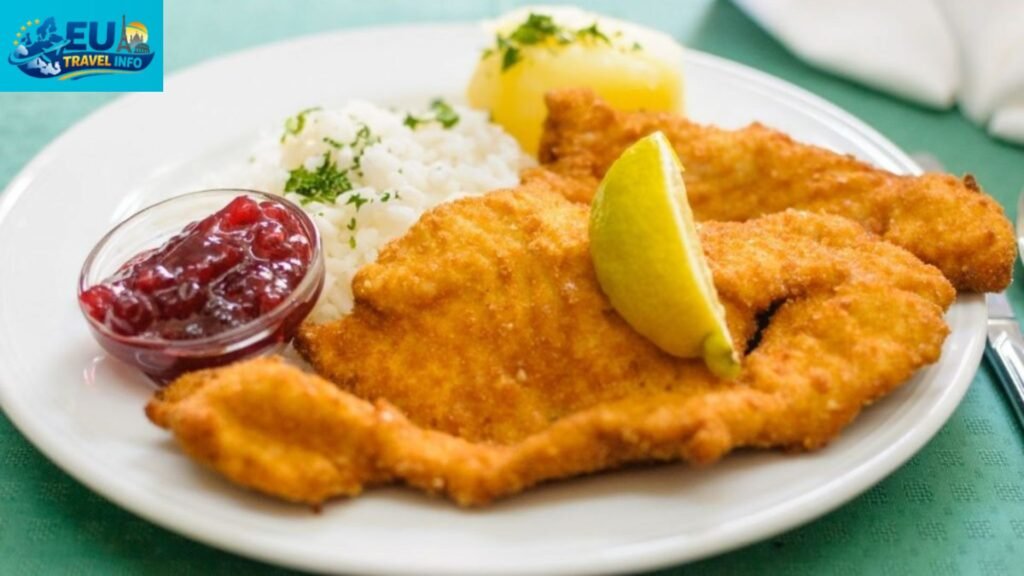
If you ask what is the most popular food in Austria, the answer is almost always the Wiener Schnitzel. The name literally means “Viennese cutlet”. You should know that this name is actually protected by law. A restaurant can only use the name “Wiener Schnitzel” if they use veal. If they use pork or turkey, they must call it something else, like “Schnitzel Wiener Art”.
A History of Gold
The history of this dish is full of legends. One story says that Field Marshal Radetzky brought the idea back from Italy in 1857. He supposedly loved a dish called Cotoletta a la Milanese. However, some books show a recipe for breaded meat in Austria as early as 1831. There is even a record from the year 1148 that mentions a dish called “lombolos cum panitio,” which might mean breaded meat.
In the old days, rich people in Venice covered their food in real gold leaf to show off. The Church stopped this in 1514. Cooks then used golden breadcrumbs to get the same look. Today, you get to eat this “golden” meal without the price of real gold.
How to Make the Perfect Schnitzel
You can try to make this at home, but it takes skill. You start with a cutlet that is about 150 to 180 grams. You must pound the meat until it is very thin. This makes the meat tender.
- First, you coat the meat in flour.
- Second, you dip it into beaten eggs.
- Finally, you cover it in fine breadcrumbs.
The secret is the frying. You must use clarified butter or a mix of oil and butter. The meat should “swim” in the fat. As it cooks, you must shake the pan. This makes the breading puff up. Chefs call this “souffléing”. You want the breading to separate from the meat just a little bit. When it is golden brown, you take it out. You serve it with a lemon wedge and potato salad.
Pro tip: Do not squeeze the lemon over the whole thing at once. Just use a little bit for each bite to keep the crust crunchy.
The Emperor’s Choice: Tafelspitz
On top of that, you have to try Tafelspitz. This is the national food of Austria for many people who live in Vienna. The name means “tip of the table”. It refers to the specific cut of beef used for the dish. Emperor Franz Joseph I loved this so much that it was served at his court almost every night.
The Ritual of the Meal
This is not just a plate of food. It is a full experience. You will usually see it served in a copper pot full of hot broth. There is a specific way to eat it.
First, you eat the beef broth. It is clear and very rich. It often has small pancakes or noodles inside.
Second, you take the bone marrow from the beef bones. You spread this on toasted dark bread with a bit of salt. It tastes like butter but much richer.
Finally, you eat the meat. The beef is very tender because it simmered for hours. You eat it with Apfelkren, which is a mix of apples and horseradish. You also get chive sauce and fried potatoes.
Gradually, you will realize why the Emperor liked it. It is hearty and makes you feel warm inside. If you go to Vienna, the place to try this is Plachutta. They have several locations, and they are the masters of this dish.
The Sweet Side: A Land of a Thousand Desserts
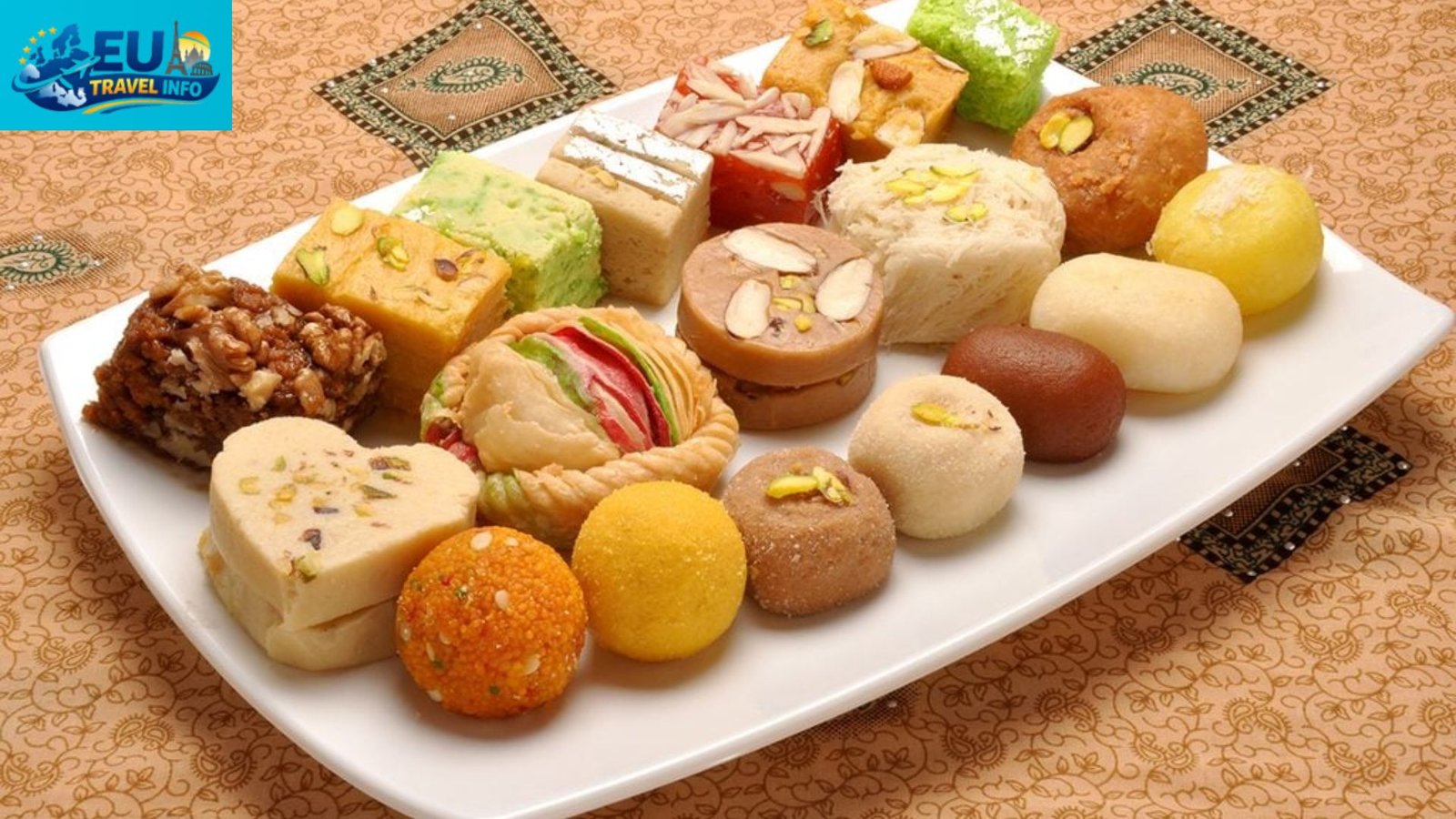
Austria is often called the land of a thousand desserts. In this country, the sweet course is just as important as the meat. Sometimes, a dessert is even served as the main meal! Plus, many of these cakes have famous stories behind them.
The Story of the Sachertorte
You cannot visit Austria without eating a slice of Sachertorte. This is perhaps the most famous chocolate cake in the world. It was invented in 1832 by a young apprentice named Franz Sacher. The head chef was sick, and Prince Metternich wanted a special dessert for his guests. Franz was only 16 years old at the time.
He made a dense chocolate cake and added a thin layer of apricot jam. He covered the whole thing in a thick layer of dark chocolate icing. The guests loved it. Today, you can still get the “Original Sachertorte” at the Hotel Sacher in Vienna. The recipe is a secret that they guard very closely. You should always eat it with a big dollop of unsweetened whipped cream.
The Paper-Thin Apple Strudel
Another classic is the Viennese Apfelstrudel. Empress Maria Theresa made this pastry famous in the 18th century. It uses a dough that is so thin you could read a newspaper through it. Inside, there are juicy apples, cinnamon, sugar, and raisins.
If you want to see how it is made, you can visit Schönbrunn Palace. They have strudel shows in the old royal bakery. You can watch the cooks stretch the dough by hand until it covers a whole table. It is a work of art.
Kaiserschmarrn: The Shredded Pancake
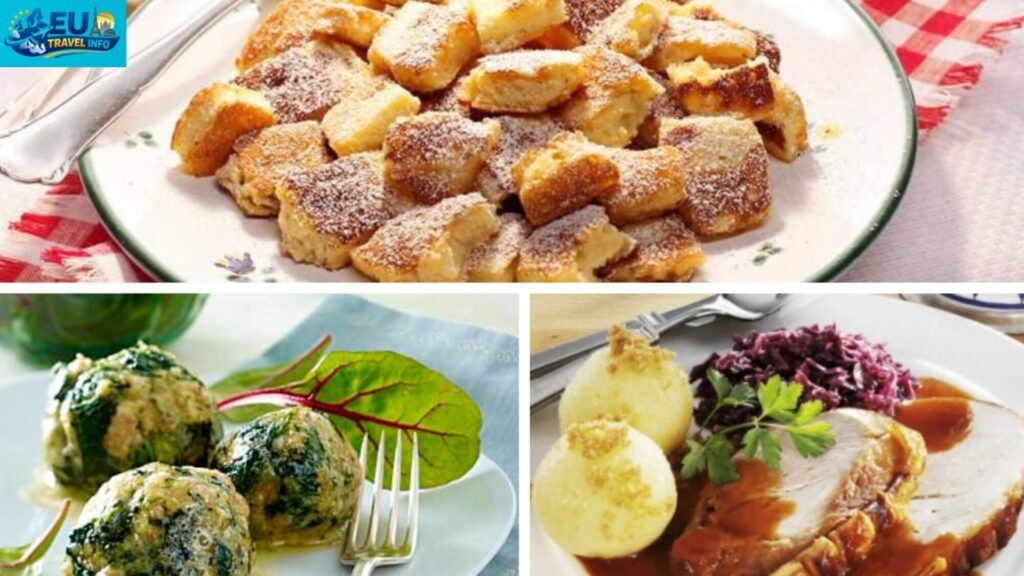
If you want something fun, order Kaiserschmarrn. This is a thick, fluffy pancake that is shredded into small pieces while it cooks. It is usually served with plum jam and powdered sugar. Legends say this was another favorite of the Emperor. It is a great meal for a cold afternoon after a long walk.
Hearty Mountain Comfort Food
Austria is not just about fancy city food. It is also about mountain life. If you go to the Alps, you will find different kinds of traditional national dish of Austria ideas.
Käsespätzle
You can think of Käsespätzle as the Austrian version of macaroni and cheese. It uses small egg noodles called Spätzle. These are mixed with a lot of melted cheese and topped with fried onions. It is heavy, creamy, and perfect for hikers. You will find this in almost every mountain hut.
Tiroler Gröstl
In the region of Tyrol, people love Gröstl. This dish started as a way to use up leftovers. It is a fry-up of potatoes, onions, and meat. Usually, they put a fried egg on top. It is simple but very filling. Similarly, you can find Erdäpfelgulasch, which is a potato stew that is great for people who want less meat.
The Culture of the Coffee House
You have to understand that eating in Austria is about more than just the food. It is about the time. In Vienna, the coffee house is like a second living room for people. You can sit for hours with just one cup of coffee and a newspaper.
You will find a huge menu of coffee drinks. There is the Melange, which is like a cappuccino but with a Viennese twist. There are also many others. This culture is so special that it is protected by UNESCO. When you sit in a place like Café Central or Café Demel, you are sitting in history.
Street Food: The Sausage Stand
Sometimes you do not want a big sit-down meal. You just want something fast. Austria has a great street food culture. You will see Würstelstands (sausage stands) on many corners.
The most famous snack is the Käsekrainer. This is a sausage that has small bits of cheese inside. When the sausage is grilled, the cheese melts. When you bite into it, the hot cheese can squirt out, so be careful! You can get it served with a piece of dark bread and some strong mustard. It is the perfect late-night snack.
Where to Eat: A Quick Guide
If you are planning your tour, here are some top spots to remember:
- Figlmüller in Vienna: They are famous for their giant Schnitzel.
- Plachutta in Vienna: The best place for Tafelspitz.
- Hotel Sacher or Demel: For the best cakes and pastries.
- Meissl & Schadn: A newer spot that focuses on the perfect Schnitzel.
- Schwarzes Kameel: A very old and fancy place for a real Viennese experience.
The Global Connection
Actually, the national cuisine of Austria is very cosmopolitan. Back in the 19th century, people like Baroness Marie von Rokitansky wrote cookbooks that included recipes from all over the world. You could find Indian curry and Russian soup in an “Austrian” cookbook.
This shows that Austria has always been at a crossroads of culture. Therefore, when you eat Austrian food, you are eating the history of Europe and beyond.
FAQ’s
What is the national dish of Austria?
Many people consider Wiener Schnitzel the national dish because it is famous worldwide. However, locals often name Tafelspitz (boiled beef) as the true traditional national dish.
Why is Wiener Schnitzel considered Austria’s national dish?
It is iconic and represents the “golden” history of the country. Its name is protected by law, and it is a staple in almost every restaurant from street stalls to fine dining.
What ingredients are used in Austria’s national dish?
For Wiener Schnitzel, you need veal, flour, eggs, and fine breadcrumbs. For Tafelspitz, you use a specific cut of beef or veal, root vegetables, and beef bones for the broth.
How is the traditional Austrian national dish prepared?
Wiener Schnitzel is pounded thin, breaded, and then fried in clarified butter until the coating puffs up. Tafelspitz is simmered slowly in a spicy broth with vegetables for several hours.
Is the national dish of Austria popular worldwide?
Yes, Wiener Schnitzel is one of the most recognized dishes globally. Versions of it appear in many other cultures, though the Viennese version remains the standard.
Are there any variations of Austria’s national dish?
Many restaurants serve pork or turkey versions of schnitzel, but these cannot legally be called “Wiener Schnitzel”. Tafelspitz can also be made with different cuts of beef depending on the chef’s preference.
Where can you try authentic Austrian national dish?
In Vienna, you should visit Figlmüller for schnitzel or Plachutta for Tafelspitz. Other top spots include Meissl & Schadn and Schwarzes Kameel.
Concluding Words
You have seen that the national dish of Austria is a beautiful mix of history and flavor. Whether you choose the crispy, golden Wiener Schnitzel or the royal, comforting Tafelspitz, you are tasting the heart of a great empire.
Between the fancy coffee houses and the cozy mountain huts, there is a meal for every traveler to love. You should make sure to try as many of these traditional foods as you can on your next trip. Your taste buds will thank you for the adventure.