You are about to embark on a journey to a land of deep forests, moving sand dunes, and cities that breathe history. Lithuania is the southernmost of the three Baltic countries. It is a place where the history stretches back to 1009 AD.
Though it is small, this country offers a huge variety of experiences for travelers who love culture and nature. You will find that a Lithuania travel itinerary is easy to plan because the rail network and roads connect all the best spots.
Essential Planning For Your 2026 Trip
First of all, you must know about the money. Lithuania uses the Euro as its currency. Prices are generally lower than in Western Europe, but the capital city of Vilnius is becoming more expensive. You can still find great value for your money in smaller towns.
If you plan to drive, you must learn the local rules. The roads are generally in acceptable to good condition. However, you should watch out for local drivers who might brake suddenly or pass you in a reckless way. You must keep your headlights on at all times of the day. Additionally, you must have a fire extinguisher, a first aid kit, and high-visibility vests in your car.
Speed limits are very specific. Within towns, the limit is 50 km/h. Outside of towns, you can go 90 km/h on paved roads. On the big highways, the limit is 130 km/h from April to October. During the winter months from November to March, this limit drops to 110 km/h.
Do not drink and drive. The legal alcohol limit is only 0.4 per mille, and new drivers must have zero alcohol in their blood. Fines are high. A speeding ticket for going 50 km/h over the limit can cost you 450 Euros. Similarly, a seatbelt violation starts at 30 Euros.
The Ultimate Lithuania Itinerary 7 Days
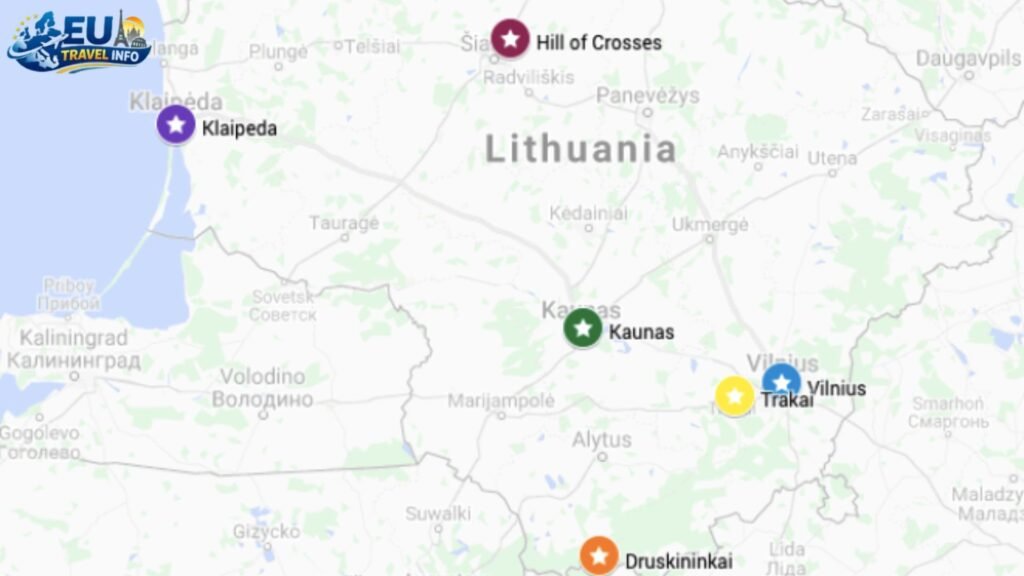
This Lithuania itinerary 7 days long is perfect for seeing the main highlights of the country. You will start and end in the capital city.
Day 1 and 2: The Charm of Vilnius
Your adventure begins in Vilnius. This is the largest city in the country. It is a modern capital but it feels very cozy. First of all, you should head to Gediminas’ Tower. The tower we see today was rebuilt in 1933, but it represents a castle from the early 1400s. From here, you can see the whole city.
You should walk through the Old Town, which is also called Senamiestis. It is one of the largest in Europe. You will see Vilnius Cathedral and the beautiful St. Anne’s Church. On top of that, you must visit the Independent Republic of Uzupis. This is a neighborhood of artists with its own constitution and flag. It is a very quirky place.
If you have an interest in history, you can not miss the Museum of Occupations and Freedom Fights. It is often called the Museum of Genocide Victims. This museum is inside an old KGB building. It tells the story of the Soviet occupation. Additionally, you should visit the Jewish Holocaust Museum.
Before the Second World War, Vilnius was known as the Jerusalem of the North. Almost one-third of the city was Jewish. Sadly, more than 90% of the Jewish population did not survive the war. You can visit the site of the Great Ghetto and the Vilnius Choral Synagogue, which is the only one that survived the war without big damage.
For dinner, you should try Etno Dvaras or Lokys. These places serve traditional food. Later, you can grab a drink at Alaus Studija or Piano Man Bar.
Day 3: Fairytales and Pastries in Trakai
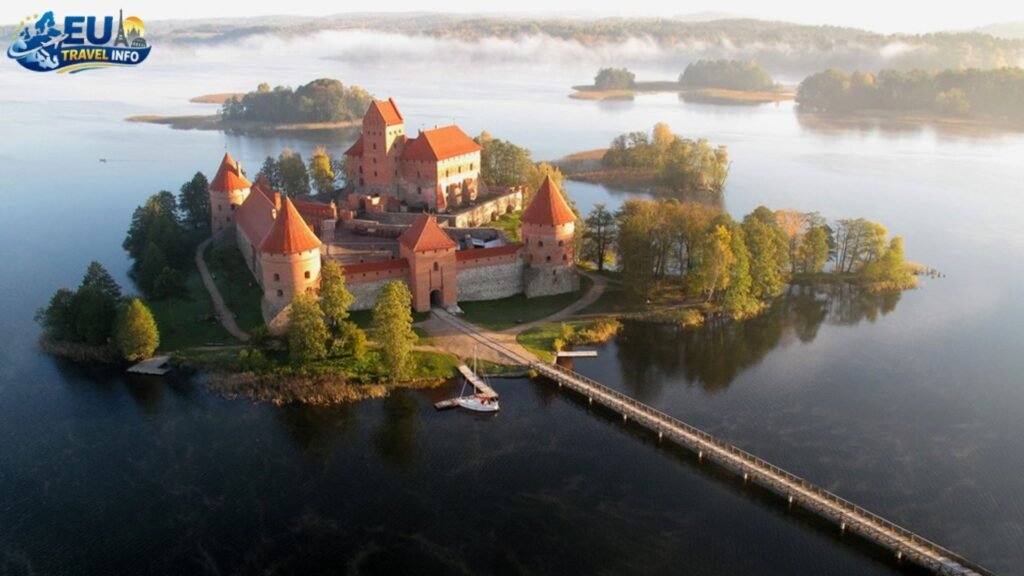
Trakai is only a 33-minute train ride or a short drive from Vilnius. It is a historic town on a lake. The main draw is the Trakai Island Castle on Lake Galve. It is a red-brick castle that looks like it came from a storybook. It was built in the 14th century.
You should arrive early, perhaps around 8:30 AM. The castle museum opens at 10 AM, but you can walk across the wooden bridge and take photos before the crowds arrive. Inside the museum, you will see medieval armor and old coins.
Trakai is also home to the Karaim people. They are a small ethnic group brought from Crimea in the 14th century to serve as guards. You must try their famous pastry called Kibinai. These are savory dough pies filled with meat or cheese. Senoji Kibinine is a very popular spot to eat them. If the weather is nice, you can take a boat tour or even a hot air balloon ride over the castle.
Day 4: Modernism and History in Kaunas
Next, you will head to Kaunas. This is the second-largest city in Lithuania. It was the temporary capital between the world wars. Therefore, it has many beautiful modernist architecture buildings. These buildings are now on the UNESCO World Heritage List.
You should visit Kaunas Castle, which was built in the 14th century to fight against crusaders. Similarly, the Pazaislis Monastery is a must-see. It is one of the best examples of Italian Baroque architecture in Northern Europe.
For something unique, visit the Devil’s Museum. It has a huge collection of devil sculptures from all over the world. Also, you can take a ride on the funiculars that have been working since the 1930s. They will take you up the hills for a great view of the city. Finally, you should visit the Ninth Fort. It is a massive fortress that served as a prison and a site of tragedy during the war.
Day 5: The Port City of Klaipeda
You will drive or take a train west to the coast. Klaipeda is a busy port city where the river meets the sea. It has a very different feel from the rest of the country. The city is full of art and sculptures. You should look for the Meridianas, a beautiful wooden ship that is the symbol of the city.
If you like animals, you can visit the Lithuanian Sea Museum or the Klaipeda Zoo. On top of that, there is a Dino Park nearby with huge dinosaur models and even a “flipped” house. For dinner, try XII or Restobaras Garažas.
Day 6: The Dunes of Nida and the Curonian Spit
From Klaipeda, you take a short ferry to the Curonian Spit. This is a long, thin strip of land between the sea and a lagoon. It is a UNESCO World Heritage Site.
The main town is Nida. You will see massive sand dunes that are 98 kilometers long in total. The Parnidis Dune is a great place to watch the sun rise or set. You can also visit Urbas Hill, where the Nida Lighthouse stands. The town of Nida is very peaceful with colorful wooden houses. You might even see a moose if you are lucky! It is a perfect place to relax and enjoy the fresh air.
Day 7: The Eerie Hill of Crosses and Siauliai
On your last day, you head north to Siauliai. Most people come here for one reason: the Hill of Crosses. This is a small hill covered in hundreds of thousands of crosses. It is a symbol of peaceful resistance and faith. It feels both fascinating and a bit eerie.
Later, you can visit the Museum of Photography or the Chaim Frenkel Villa, which is a palace from the 20th century. Finally, you will drive back to Vilnius to catch your flight home.
Other Itinerary Options
If you do not have a full week, you can still see a lot.
- Lithuania itinerary 4 days: You can spend two days in Vilnius, a day trip to Trakai, and one day in Kaunas.
- Lithuania itinerary 5 days: This allows you to add the Hill of Crosses or a quick trip to the coast.
- Lithuania itinerary 10 days: With ten days, you can travel more slowly. You could visit the Plokstine missile base, which was a secret Soviet site. You could also spend more time in the Zemaitija National Park or visit other Baltic cities. Often, travelers look for an itinerary lithuania latvia estonia combined. A latvia lithuania itinerary is very common because the two countries are so close. You can easily drive from Vilnius to Riga in a few hours.
Culture and Food
Lithuanian food is heavy and filling. You will see a lot of potatoes and meat. On top of that, the country has a very unique beer culture. In Vilnius, you can find bars that serve “live” beer. This beer is unfiltered and unpasteurized. It is made in small village breweries and must be drunk within a few days. It is a very special taste that you can only find here.
The people are proud of their history. Though they have suffered through many occupations, they have kept their culture alive. You will find that most younger people speak English very well, but older people might speak Russian or German.
Traveling to Lithuania Reddit Tips
Many travelers on lithuania itinerary reddit threads suggest renting a car to see the countryside. While the trains are good between big cities like Vilnius and Kaunas, they do not go everywhere. Also, people often ask if it is better to visit in summer or winter. Summer is great for the beaches in Nida, but the Medieval Festival in Tallinn or local winter markets are also beautiful.
Frequently Asked Question
How many days in Lithuania is enough?
A stay of 7 days is usually enough to see the major cities and the coast. If you only want to see the capital, 3 days is plenty.
How many days are needed for Lithuania?
You need at least 5 to 7 days to appreciate the history of Vilnius, the castles of Kaunas and Trakai, and the nature of the Curonian Spit.
Is Lithuania or Latvia better?
Both are beautiful in different ways. Lithuania has more impressive castles and the unique Curonian Spit. Latvia has the large cosmopolitan city of Riga. Many people visit both on one trip.
Concluding Words
This Step-By-Step Lithuania Itinerary Guide 2026 For Visitors shows that the country is a hidden gem. You can walk through the medieval streets of Vilnius, eat traditional Kibinai in Trakai, and stand among the thousands of crosses in Siauliai.
Whether you choose a lithuania itinerary 5 days or 10 days long, you will find a mix of dark history and stunning natural beauty. Pack your bags for a Baltic adventure that you will never forget.