You stand on a jagged peak and the crisp air fills your lungs. The horizon is a jagged line of white and blue. You are in the heart of Europe. You are in the Swiss Alps. This place is a dream for every traveler who loves nature and luxury. You will find that 2026 is the perfect year to plan your grand escape to this mountain paradise.
The Swiss Alps offer a world of variety. You can see 48 peaks that reach higher than 4,000 meters. You can ride trains that feel like glass boxes in the sky. You can walk through meadows that look like a sea of vibrant wildflowers. However, you must pick the right time to go. The weather and the crowds change every month. Therefore, you need a guide that breaks down the details of every season.
First of all, you should think about what you want to do. Do you want to ski on powdery slopes? Do you want to hike on trails that have no snow? Do you want to save money on your hotel? These questions will lead you to your perfect month.
The Winter Wonderland: December to February
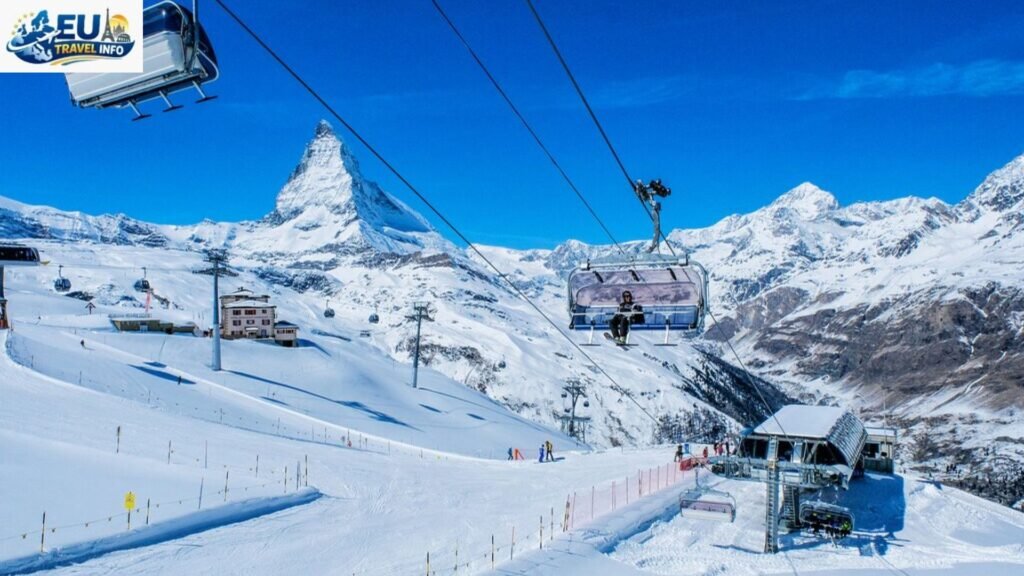
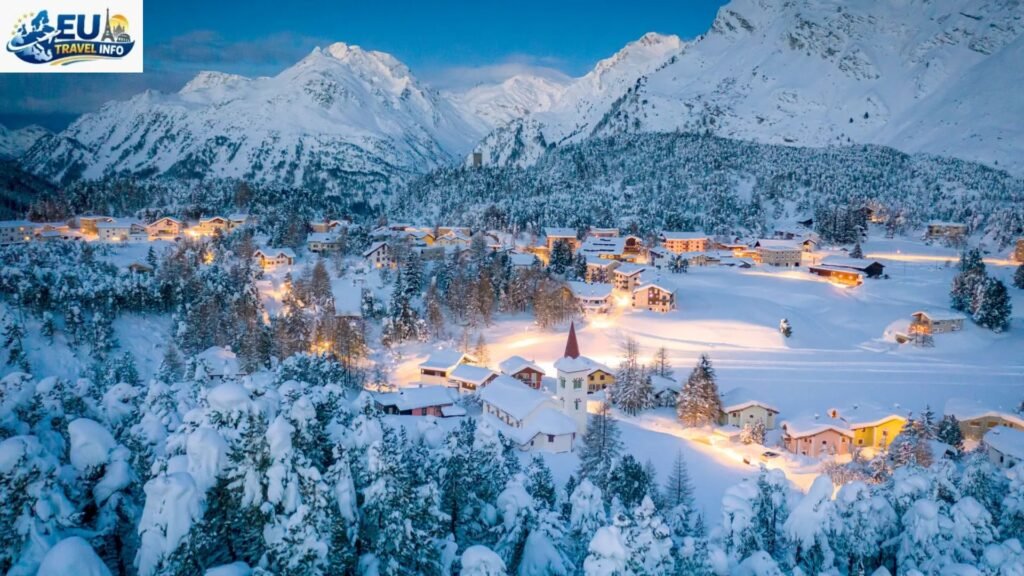
Winter in the Swiss Alps is a classic experience. It is the best time to visit Switzerland for snowfall. The scenery is a vast white blanket. It is silent and peaceful.
December: The Festive Start
December is a magical month. You will see colorful markets in the cities. You will smell the sweet scent of spiced wine and roasted nuts. The winter sports season begins in early December and it runs through Easter. High temperatures in the Alps stay around 23 degrees F while lows drop to 12 degrees F. Snow falls at an average of 10 inches per week. Plus, you can celebrate Christmas and New Year in a snowy village. This is a peak time. Therefore, prices for hotels in resort towns like Zermatt and Mürren will surpass the summer highs.
January: The Deep Freeze
January is even colder. Highs average 21 degrees F and lows stay near 11 degrees F. The snow picks up speed and falls at 17 inches per week. This is the best time to visit switzerland temperature wise if you want deep winter. The cities are quieter at this time. On the contrary, the ski resorts are bustling with life. Nighttime comes early. It will draw the shades on your sightseeing before you even have dinner.
February: The Golden Window
You will find that February is a special month. The temperatures rise a tiny bit to a high of 24 degrees F. The snow is deep and beautiful. February is the best time to visit the Swiss Alps if you want to ride the Glacier Express. The train ride lasts 8 hours and it takes you over snow-filled passes. At this time, you have a guarantee of a snow-filled landscape. Additionally, seat reservations for the train are CHF 10 cheaper in winter than in summer. You can often make last-minute changes because the crowds are smaller than in the summer.
After the snow begins to melt, the landscape changes its face completely.
The Spring Rebirth: March to May
Spring is a time of change. It is a shoulder season. This means you can find a cheapest time to visit switzerland window.
March: The Bridge Month
March is almost as good as February for snow lovers. Snowfall starts to drop to 8 inches per week. Temperatures rise by about 5 degrees F. You still have a white world, but the days are longer.
April: The Middle Season
April is a bit of a gamble. The weather is often “iffy” and mountain towns can feel dead. Many hotels and restaurants close for a break between the ski season and the summer season. High temperatures reach 36 degrees F. Lows stay in the mid 20s. Though it is a quiet time, you can see the cattle processions in late May or June as cows move up to the mountains.
May: The Flower Awakening
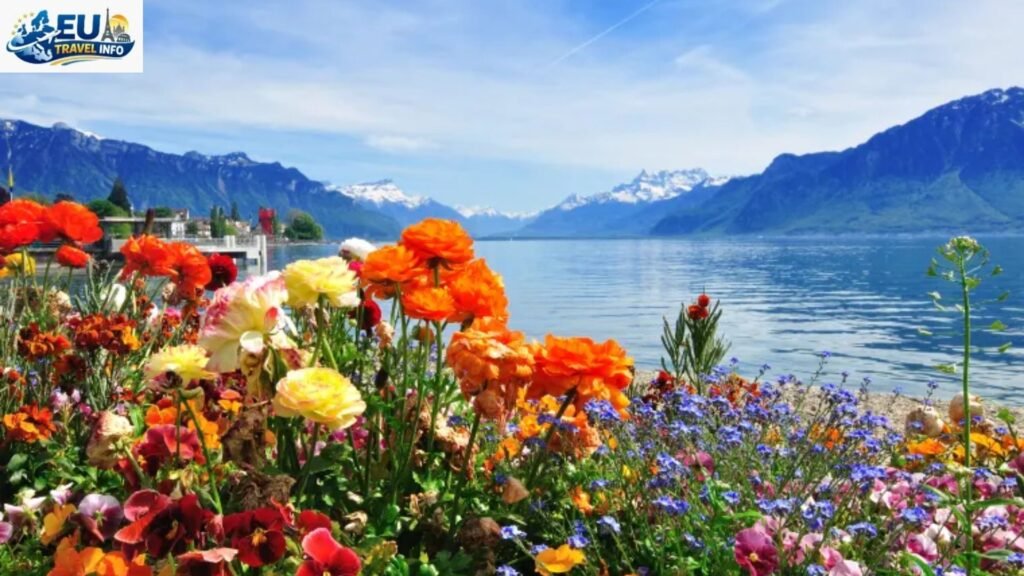
May is a turning point. Snowfall drops to just a few inches per week. High temperatures in the Alps reach the mid 40s. In the lowlands, you will see flowers blooming everywhere. Mid-April to early June is a shoulder season sweet spot. You will find that cities like Zurich and Lucerne have temperatures between 10 and 18 degrees C. It is cool but not freezing. Similarly, you can enjoy lake cruises without the heavy summer crowds.
Later, the sun stays out longer and the mountain trails finally open.
Summer Glory: June to August
Summer is the peak tourism season in the Swiss Alps. It is the best time to visit switzerland in summer for hikers and sun lovers.
June: The Trail Openings
June is a wonderful month. The high mountain passes like Furka, Grimsel, and Susten usually open in mid-May or June. Daytime highs reach the mid 50s F at higher elevations. You will see fewer crowds than in July or August. Most importantly, the wildflowers start to take over the meadows in mid-June. You can hike the Stoos panorama trail and see flowers all along the ridge. Pure beauty.
July: The Peak of the Sun
July is the warmest month in the Alps. High temperatures reach almost 60 degrees F in the mountains and up to 28 degrees C in the cities. This is the best time to visit switzerland for flowers because the alpine gardens are in full bloom. You should visit the Allmendhubel Flower Trail near Mürren for peak bloom. The days are very long. It stays light until after 21:00. However, this is also the most expensive season. Hotel rates in places like Interlaken and Zermatt climb to the highest levels of the year.
August: The National Celebration
August is very similar to July. The snow is gone from most routes. The weather is stable. On August 1st, you can join the Swiss National Day celebrations. You will see fireworks and colorful processions everywhere. At the Rhine Falls, the biggest show happens the night before. Temperatures can reach 32 degrees C during the day in some areas.
Finally, the heat fades and the mountains turn to gold.
Autumn Gold: September to November
Autumn is the season for photographers and those who want a best time to visit switzerland less crowded experience.
September: The Photographer’s Dream
September is arguably the best month for a road trip or a hiking holiday. The temperatures are pleasant and stay around 19 to 21 degrees C. The air is clear. The skies are blue. You will see the cattle descent or “Alpabzug” between mid-August and late September. Farmers dress in traditional costumes and lead decorated cows down to the valleys. It is a sight you will never forget. Additionally, the grapes are harvested in the vineyards.
October: The Larch Season
October brings a unique spectacle to regions like the Engadin. The larch trees turn a brilliant golden yellow. It is a “Swiss Indian Summer”. This happens from the beginning of October until November. The air gets cold again. You might even see the first snow dusting the golden forests. This creates a stunning contrast of colors. Most mountain railways stay open until mid-October.
November: The Quiet Month
You will find that November is often called the worst time to visit switzerland by some. The Glacier Express does not even run during this month. It is a “between time” or Zwischenzeit. The landscape can look dark before the heavy snow arrives. Temperatures stay around 50 degrees F but there is a lack of snow. However, if you want to see the cities without any tourists, this is the time.
A Detailed Budget Guide for 2026
Switzerland is not a cheap destination. You must plan your money carefully. A typical budget traveler needs about 95 to 100 CHF per day. This covers staying in hostels and cooking some of your own meals.
If you want a mid-range experience, you should expect to spend more. A 7-day road trip for two people in 2026 will likely cost between CHF 3,000 and CHF 5,000.
Here is a breakdown of common costs:
- Car Rental: 700 to 1,200 CHF per week.
- Motorway Vignette: 40 CHF (this is a mandatory annual sticker).
- 3-Star Hotel: 1,200 to 1,800 CHF for a week.
- Meals: 600 to 900 CHF (if you mix restaurants with grocery store food).
- Swiss Travel Pass: This covers trains, buses, and boats. It starts at about 232 CHF for three days.
You can save money by shopping at supermarket deli counters like Coop or Migros. A hot meal there costs 10 to 15 CHF while a restaurant meal costs 25 to 40 CHF.
The Best Hiking Trails and Road Trips
You should not miss the chance to explore the land on foot or by car.
Top Wildflower Hikes
- Schynige Platte Ridge Trail: This area has an alpine flower garden where you can see the famous Edelweiss.
- Zermatt Flower Trail: This trail ends at a playground with a view of the Matterhorn.
- Chäserrugg Flower Trail: This path sits on cliffs overlooking the blue Walensee lake.
Iconic Road Trips
- Golden Pass Loop: This 3 to 5-day trip takes you from Lausanne to Interlaken and Lucerne. It is perfect for first-timers.
- The Three Passes: You can drive the Furka, Grimsel, and Susten passes in one day. These roads have hairpin turns and glacier views.
- Lake Geneva Wine Route: This is a leisurely drive through the Lavaux UNESCO vineyards.
Essential Travel Tips for Your Journey
You need to know a few more things before you pack your bags.
- Currency: Switzerland uses the Swiss Franc (CHF), not the Euro.
- Languages: People speak German, French, Italian, and Romansh.
- Driving: You must drive on the right side of the road. You must keep your headlights on at all times.
- Clothing: You must pack layers. The weather in the mountains can change in a second.
On top of that, you should bring a universal power adapter. You should also bring sunglasses if you visit during the snowy months because the sun reflecting off the snow is incredibly bright.
Gradually, you will see that every season has a gift for you. You just have to choose the one that matches your heart.
FAQ
Which month is most beautiful in Switzerland?
Many people believe that July is the most beautiful because of the green meadows and wildflowers. Others prefer September or October when the forests turn gold and the skies are perfectly clear.
What is the best month to visit the Swiss Alps?
If you want to ski, February is the best month due to reliable snow. If you want to hike, September is the best month because the weather is stable and the trails are not crowded.
What is the cheapest month to go to Switzerland?
The shoulder seasons of April to May and September to October are generally the cheapest. You will find lower rates for hotels and airfares during these times.
Is the French or Swiss Alps better?
The Swiss Alps are famous for having a very high concentration of “four-thousanders”. You can see iconic peaks like the Matterhorn and Eiger which are unique to the Swiss side.
Concluding Words
The Swiss Alps are a year-round destination that offers everything from snowy train rides to golden autumn hikes. You will find that winter is best for snow sports, summer is ideal for alpine flowers, and autumn provides the best value and fewer crowds. Plan your 2026 trip by picking the season that fits your budget and your love for adventure.