
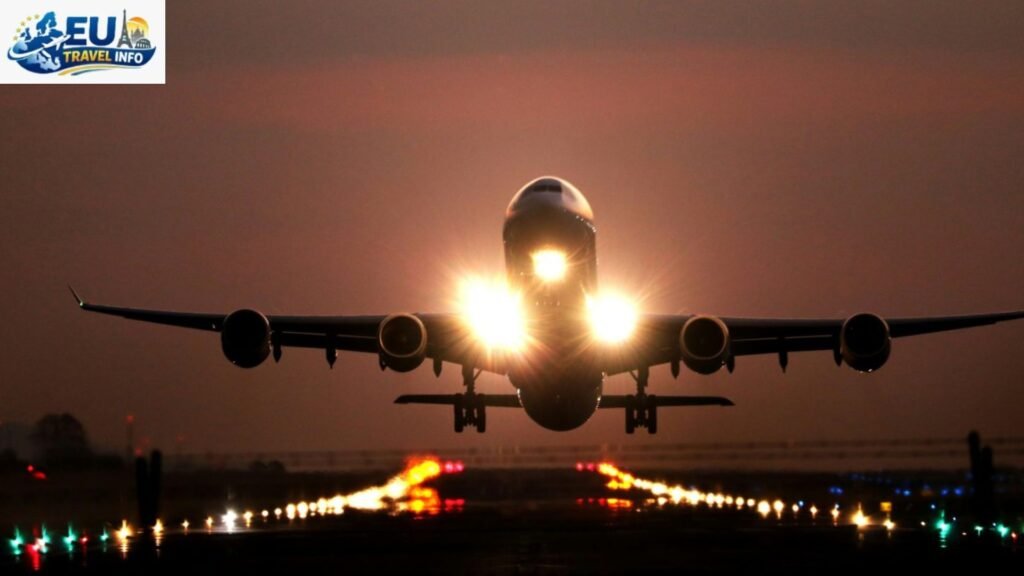
You stand in the middle of a busy airport terminal. You look at the big departure board. You see a long list of cities like London, Paris, and Frankfurt. You notice something very strange. Every single flight to these places leaves between 6:00 PM and 11:00 PM.
It is almost like a law of nature. You might ask yourself, Why Do Flights To Europe Leave At Night? You are not alone in this curiosity. It is a question that every mature traveler asks at some point. It feels like a mystery. A midnight puzzle. A secret plan by the airlines.
You want to understand the logic behind this pattern. You want to know if it is for your comfort or for their profit. The truth is a mix of both. It involves physics, biology, and billions of dollars in math. First of all, let us look at the most basic reason. It is the way the world turns.
The Great Time Compression
The Earth rotates from west to east. It moves at over 1,000 miles per hour at the equator. When you fly east toward Europe, you are flying into the sunrise. The clock moves faster than you do. You lose hours every time you cross a time zone boundary. For example, a flight from New York to London takes about 7 hours. However, you cross five time zones along the way.
If you depart at 10:00 PM and fly for 7 hours, you land at 10:00 AM local time. The night simply disappears. You board the plane. You eat a meal. You close your eyes for a few hours. Suddenly, the sun is up. The flight attendants are serving orange juice. You are in a new country. This is the red-eye experience. You might feel like a zombie. However, your circadian rhythm stays somewhat intact because you slept when your body expected it.
“Getting a good night sleep on the way over is key,” says user DC-ZauberMeister. Most travelers agree with this sentiment. You want to arrive in the morning so you can start your vacation. You do not want to land at midnight and struggle to find a hotel. Therefore, the night schedule is a tool for your internal clock.
Why Do International Flights Leave At Night?

You might wonder if this is just about sleep. It is not. There is a massive financial engine behind these schedules. Airlines own assets that cost $300 million each. A Boeing 777 is a giant machine. It only makes money when it is in the sky. It burns cash when it sits on the ground.
Airlines use night flights to maximize aircraft utilization. This is a measure of how many hours a plane flies per day. Low-cost carriers like Ryanair are obsessed with this number. They try to get 9.38 flight hours per aircraft every single day. On top of that, larger jets can clock 18 hours of revenue generation if they fly from London to Singapore and then to Sydney.
If an airline flew you to Europe during the day, the plane would arrive late at night. The airport might be closed. The plane would sit there for 8 hours doing nothing. That is a waste of money. Instead, they fly you overnight. The plane lands at 6:00 AM. They clean it. They fuel it. It flies back to the United States by noon. This cycle keeps the money flowing. Similarly, you get to keep your vacation days. You do not spend a whole Saturday sitting in a seat. You spend it walking through the streets of Rome.
The Golden Morning Banks
Have you ever noticed how everyone at the airport seems to be running for a connection? This is because of coordinated arrival banks. Major hubs like Heathrow, Frankfurt, and Dubai operate on waves. They want hundreds of planes to land between 6:00 AM and 11:00 AM.
This morning window is pure gold. It allows you to catch a second flight to a smaller city. You land in London at 7:00 AM. You catch a flight to Paris or Edinburgh at 10:00 AM. If your first flight arrived at midnight, those connections would be gone. You would have to pay for a hotel. You would lose time. Airlines would lose your business to a competitor who can get you there faster. Therefore, they fight for these early morning slots. In 2016, one airline reportedly paid $75 million just for a pair of slots at Heathrow. That is a lot of money for a specific minute on the clock.
Riding the High Altitude River
You cannot talk about flights to Europe without talking about the jetstream. It is a powerful river of air high in the sky. It flows from west to east. When you fly to Europe, you are surfing on this wind. It gives you a tailwind. These winds average 100 to 150 knots. In the winter, they can even go over 200 knots.
This wind makes you go very fast. Some flights have recorded ground speeds over 740 miles per hour. It shaves an hour or more off your travel time. It also saves a huge amount of fuel. On the contrary, flying home to the states is a struggle. You are flying against the wind. It takes longer. It burns more fuel. This is why you often leave Europe in the morning. You want to arrive in America in the afternoon so you still have a full evening left.
Why Are European Airports Closed At Night?
You might think that airports stay open 24/7 like a diner. That is not true for many major hubs. Many airports have strict night curfews. These are not random rules. They exist because of public health and local noise laws. People live near these airports. They do not want a giant jet waking them up at 3:00 AM.
Let us look at a few examples:
- Heathrow (London): The curfew runs from 11:30 PM to 6:00 AM. This helps reduce noise for millions of people.
- Frankfurt (Germany): This is one of the strictest bans. It is from 11:00 PM to 5:00 AM.
- Zurich (Switzerland): They shut down from 11:00 PM to 6:00 AM.
- Sydney (Australia): They enforce a hard curfew with almost no exceptions.
These curfews force airlines to time their arrivals perfectly. If a pilot arrives too early, they might have to circle the airport and wait for the clock to hit 6:00 AM. If they are late, they might have to land at a different airport entirely. This is one reason why europe flights cancelled or delayed sometimes. If a plane misses its departure window and the curfew starts, it cannot take off.
The Mystery of Daytime Flights

You might ask, do flights go down at night? Usually, the answer is no. Most of the action happens when the sun is down. However, there are a few daytime flights. They leave New York or Boston early in the morning. They land in London around 8:00 PM or 9:00 PM.
A few airlines like British Airways, Delta, and United offer these. They are great for people who hate red-eyes. You stay awake during the flight. you watch movies. You work on your laptop. When you land, you go straight to a hotel bed. This can help with jet lag.
Though they sound nice, they are rare. Why? Because the airplane math is bad for them. The plane lands at night and sits there until the next morning. It does not fly. It does not make money. Also, you lose an entire day of your trip sitting in a seat. Most travelers would rather sleep on the plane and save a night of hotel costs.
The Jet Lag Battle
You have felt it before. The brain fog. The heavy eyes. The feeling that your body is in the wrong century. This is jet lag. It happens because your circadian rhythm is out of sync with the local time.
Your body has a natural cycle for things like body temperature and heart rate. It also releases cortisol to wake you up in the morning. When you cross five or six time zones, your body is still trying to wake you up when it is midnight in London.
Eastward travel is usually harder on the body than westward travel. You are shortening your day. You are forcing your internal clock forward. This is why the lie-flat seats in business class are so popular for night flights. If you can get five or six hours of real sleep, you can “hit the ground running”.
Will Flights To Europe Go Down?
You are probably looking for a deal. You want to know if prices will drop. The airline industry is very competitive. However, it operates on razor-thin profit margins. For low-cost carriers, the margin is only about 0.8 Euro cents per seat kilometer. Full-service airlines make a bit more, around 2.6 Euro cents.
Airlines are now using artificial intelligence (AI) to make things cheaper and more efficient. For example, Ryanair partnered with a company called Optifly. They used AI to build better flight schedules. They managed to increase their seat capacity by 38% in one season.
Gradually, this technology will help airlines find more ways to fly more people for less money. But do not expect prices to drop overnight. Fuel costs and airport fees are still high. Plus, the demand for travel to Europe is stronger than ever.
The Reddit Debate: Business Class Strategy
There is a famous debate on Reddit about when to buy a business class seat. If you can only afford it one way, which leg should you pick?
- The Case for Eastbound: You get a flat bed. You sleep through the night. You arrive refreshed. You do not waste your first two days of vacation being tired.
- The Case for Westbound: The flight is longer because of the headwinds. You get more time to enjoy the expensive food and wine. You stay awake anyway because it is a daytime flight.
“I’d splurge for sleep next time,” says user LikesToLurkNYC after trying a cheaper seat. Most frequent flyers agree. The night flight is the one where the luxury seat matters most. You are paying for the bed, not just the steak.
The Safety of the Night
Is it safer to fly at night? You might worry about the dark. On the contrary, the sky is actually a very calm place after the sun goes down. There is less congestion. There are fewer planes in the air. Air traffic control can often give pilots more direct routes.
Additionally, the cabin is easier for the crew to manage. Most people are sleeping. There are fewer people walking in the aisles. This makes it safer if the plane hits turbulence. It is much easier to manage a cabin when everyone is buckled into their seats.
The Logistics of the Crew
You are not the only one who needs sleep. Pilots and flight attendants have strict regulatory limits on how long they can work. Long-haul planes have special bunk facilities hidden above the cabin. This allows crew members to take turns sleeping.
The night schedule works well for these rotations. The crew starts their duty in the evening. They work through the night. They finish their shift the next morning. This fits perfectly with the aircraft’s schedule. It keeps the system moving without needing extra crews on the ground.
Flying the North Atlantic Tracks
Have you ever wondered how planes do not hit each other over the ocean? There is no radar in the middle of the Atlantic. Instead, controllers use the North Atlantic Tracks (NAT-OTS). These are like highways in the sky.
These tracks change twice every single day. They are adjusted based on the wind. The “highway” moves to wherever the jetstream is strongest.
- Eastbound Tracks: These are for the night flights. They are created to catch the tailwinds.
- Westbound Tracks: These are for the daytime flights. They are planned to avoid the strongest headwinds.
Airlines must report their position as they cross various waypoints. They use satellite links or high-frequency radios to stay in touch with controllers in Gander (Canada) and Shanwick (UK). This system allows thousands of planes to cross the ocean safely every night.
Practical Tips for the Mature Traveler
You have a long night ahead of you. You want to be comfortable. Here is what the experts suggest for your next night flight to Europe:
- Compression Socks: These help prevent swelling and blood clots.
- Noise-Canceling Headphones: These block out the engine hum. They are worth every penny.
- Hydration: Drink a lot of water. Avoid too much coffee or alcohol. The cabin air is very dry.
- The First Hour Rule: Make the first hour of the flight boring. Do not watch an action movie. Do not drink a double espresso. Let your brain realize it is nighttime.
- Pacing: Do not overeat. Large meals can make it harder to sleep.
The Future of the Skies
The aviation world is changing. Newer planes are quieter. They burn less fuel. AI is making schedules more agile. We might see more variety in the future. We might see more daytime options as airlines find ways to keep their planes busy.
However, the core reasons for night flights will likely remain. The Earth will keep spinning. The jetstream will keep blowing. Humans will still want to land in the morning to start their day. It is a system that has been perfected over decades. It is a dance of physics and profit.
Finally, you now know the secret. You are not just a passenger on a plane. You are a part of a massive global flow. You are riding the wind. You are beating the clock. You are moving across the world at the speed of sound, all while you sleep in a chair.
Frequently Asked Questions
Why do international flights leave at night?
International flights often leave at night to line up with the natural sleep window of the human body. This makes the long journey feel shorter. Also, it allows planes to land in the morning when major airports are busy with connecting flights. This schedule helps airlines keep their expensive planes moving and making money throughout the 24-hour cycle.
What is the riskiest time to fly?
Studies on human performance show that errors and accidents are more likely to occur during the “hour of lowest resistance” for the human body. This usually happens after midnight when the biological clock is at its lowest point. However, modern safety systems, autopilot, and strict crew rest rules are designed to prevent mistakes during these times.
Why are there no night flights in Europe?
Many European airports have strict curfews to protect the health of people living nearby. Noise from jet engines can disrupt sleep for millions of residents. Therefore, airports like Heathrow and Frankfurt often ban or limit landings and takeoffs between 11:00 PM and 6:00 AM.
Why are US to UK flights overnight?
These flights are overnight because of the “time loss” caused by traveling east. Because the UK is 5 to 8 hours ahead of the US, a daytime flight would arrive in the middle of the night when the airport is closed. An overnight flight allows passengers to land in the morning and begin their day immediately.
Concluding Words
The night flight to Europe is a classic travel experience built on smart economics and the laws of physics. Airlines use these schedules to maximize their profits, ride the powerful jetstream, and meet the high demand for morning connections. While the red-eye can be tiring, it remains the most efficient way to cross the Atlantic and start your adventure without losing a precious day of vacation.